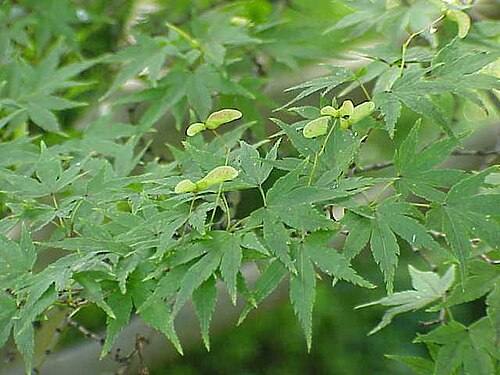
Photo: Kurt Stüber [1] · CC BY-SA 3.0 · Wikimedia Commons

Japanese maple
Acer palmatum
Also called Palmate maple, Smooth Japanese maple
Tree · Family Sapindaceae · Native to Japan, Korea and China
A small, slow, graceful tree with deeply cut leaves that turn red, orange or gold in autumn. It suits small gardens and large pots.
Not on the ASPCA's list: keep it out of reach of pets.
Care
Light
Part sun
Dappled shade or morning sun with shelter from hot afternoon sun and wind. Leaf edges that go brown and crispy mean scorch. Red types colour best with some sun.
Water
About every 7 days in the growing season, every 30 in the cool season
Water new trees weekly for the first 2 years. Potted trees dry out fast in summer, so check daily in heat. Established trees need water only in long droughts. Never leave roots in standing water.
Water when the top 5 cm (2 in) of soil is dry
Humidity
Medium humidity
Average air is fine. Shelter from hot, dry winds, which scorch the leaf edges.
Temperature
10 to 25 °C (50 to 77 °F)
Hardy to about -20 °C (-4 °F), depending on cultivar. Late frosts can kill new spring leaves.
Soil
Moist, humus-rich, well-drained soil, slightly acid. Mulch the roots and avoid chalky soil or wet ground.
Feeding
Every 12 weeks in the growing season
Feed once in spring with a slow-release feed, about every 12 weeks at most. Too much feed gives weak growth and spoils colour.
Repotting
Not repotted in the ground. Potted trees need repotting every 2 to 3 years in late winter, into a slightly bigger pot, and root pruning.
Pruning
Prune little. Remove dead and crossing branches in midsummer or late autumn. Never prune in late winter or spring, when the sap runs and bleeds.
Propagation
Seed grows true only for plain green types and takes 2 years. Most cultivars are grafted, so buy a named tree rather than try it at home.
Size
200 to 600 cm (79 to 236 in)
Slow growing
Outdoors
USDA zones 5 to 8
Plant in a sheltered spot with dappled shade, away from cold winds. Give 2 to 4 m (6 to 13 ft) of space. Many types are suited to large pots.
Common problems
Brown, crisp leaf edges
Sun or wind scorch, or dry soil
Move to shade or shelter and water deeply in dry spells. Mulch.
Branch suddenly wilts and dies back
Verticillium wilt
Cut out dead branches to healthy wood and do not replant a maple there.
Young leaves blackened in spring
Late frost
Cover in frost or move pots to shelter. Trees usually reshoot.
Poor autumn colour
Too much shade or too much feed
Give more sun, but not hot sun, and stop feeding.
Sticky leaves, small insects
Aphids
Spray off with water.
Did you know?
The Japanese word for autumn leaf viewing, momijigari, is named for the maple, and many people travel to see Acer palmatum turn red.
General care information for a typical plant. Conditions in your home or garden may need a different rhythm.
Not sure what your plant is?
Identify a plant from a photoSee this guide in the appKagn Plants also keeps your own plants with watering reminders, and its plant doctor reads what is wrong with one.
Updated 22 November 2026.