Photo: SAplants · CC BY-SA 4.0 · Wikimedia Commons

Yarrow
Achillea millefolium
Also called Milfoil, Common yarrow, Thousand-leaf
Garden flower · Family Asteraceae · Native to Europe, temperate Asia and North America
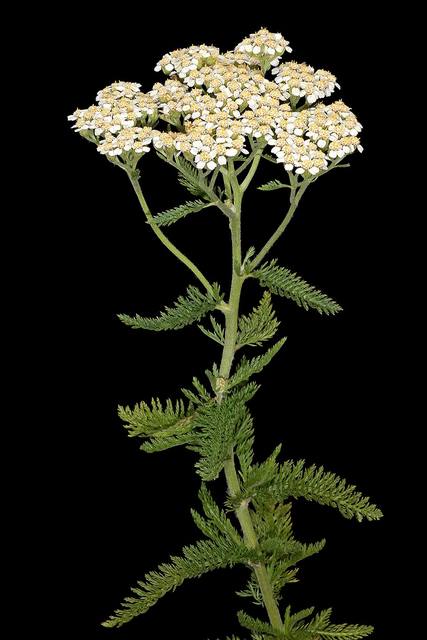
A tough, feathery-leaved perennial with flat heads of tiny white to pink flowers. Bees and hoverflies love it, and it thrives on poor, dry soil.
Toxic to cats and dogs
Toxic principle: Glycoalkaloids (achillein), monoterpenes, sesquiterpene lactones (achillin)
Signs: Vomiting, diarrhea, colic, drooling, anorexia, dermatitis, depression
Care
Light
Full sun
Plant it in full sun, 6 or more hours. In shade it grows tall, floppy and leafy with few flowers.
Water
About every 10 days in the growing season, every 30 in the cool season
Water new plants weekly for the first season, then leave it alone except in long droughts. Established plants cope with dry soil. Wet, heavy soil is the commonest cause of rot.
Water young plants weekly; established plants only in long dry spells
Humidity
Low humidity
Dry or humid air makes no difference outdoors. In a wet, crowded bed it can get powdery mildew.
Temperature
10 to 28 °C (50 to 82 °F)
Hardy to about -35 °C (-31 °F). Grows best at 10 to 28 °C (50 to 82 °F) and the foliage dies back in winter.
Soil
Any well-drained soil, even poor or stony. Rich, damp soil makes it floppy and spreading. It tolerates a wide pH range.
Feeding
It does not need feeding. Rich soil or fertiliser gives soft stems that flop.
Repotting
Every 3 years
Dig up and divide clumps every 3 to 4 years in spring or autumn, as the centre gets thin.
Pruning
Cut off faded flower heads to keep it blooming, or leave some for the birds. Cut stems to the ground in late autumn or early spring.
Propagation
Divide a clump in spring or autumn: each piece with roots grows. It also self-seeds freely, and seedlings can be moved while small.
Size
30 to 90 cm (12 to 35 in)
Medium growth
Outdoors
USDA zones 3 to 9
Grows in full sun in borders, meadows and gravel. Space plants 30 to 45 cm (12 to 18 in) apart. It spreads by creeping roots.
Common problems
Plant flops over
Too much shade, rich soil or too much feed
Move it to full sun and stop feeding. Cut stems back by half in early summer to keep them sturdy.
White powder on leaves
Powdery mildew in humid or crowded beds
Thin the clump for air flow and cut off bad stems. New growth is usually clean.
It spreads into the lawn or bed
Creeping roots and self-seeding
Dig out runners each spring and cut flower heads before seed forms.
Stems rot at the base
Soil that stays wet
Lift and replant on a mound or in gritty soil, or move it to a drier place.
Few flowers
Too little sun or an old, crowded clump
Give it full sun and divide the clump every 3 to 4 years.
Did you know?
The genus name Achillea comes from Achilles, who in legend used the plant to treat his soldiers' wounds. Old names include soldier's woundwort.
General care information for a typical plant. Conditions in your home or garden may need a different rhythm.
Not sure what your plant is?
Identify a plant from a photoSee this guide in the appKagn Plants also keeps your own plants with watering reminders, and its plant doctor reads what is wrong with one.
Updated 22 November 2026.