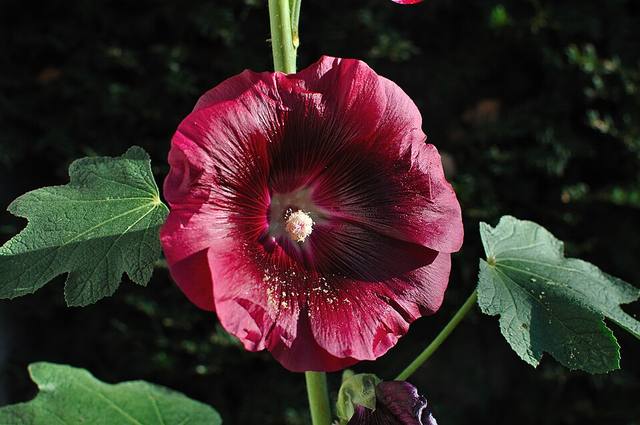
Photo: PJDespa · CC BY-SA 3.0 · Wikimedia Commons

Hollyhock
Alcea rosea
Also called Common hollyhock, Garden hollyhock
Garden flower · Family Malvaceae · Native to Southwest Asia and Turkey
A tall cottage-garden plant with spires of large, saucer-shaped flowers in many colours. It is short-lived but self-seeds, and is loved by bees.
The ASPCA lists this plant as non-toxic to cats and dogs
Care
Light
Full sun
Full sun and shelter from wind. In shade it grows tall and weak with few flowers.
Water
About every 7 days in the growing season, every 21 in the cool season
Water deeply once a week for the first summer. Established plants have a deep root and need water only in drought. Wet soil in winter rots the crown.
Water when the top 5 cm (2 in) of soil is dry
Humidity
Medium humidity
Outdoor humidity is no concern. Damp, still air favours rust.
Temperature
10 to 28 °C (50 to 82 °F)
Hardy to about -34 °C (-30 °F). Grows best at 10 to 28 °C (50 to 82 °F).
Soil
Rich, well-drained soil with compost. It tolerates clay if it drains. Neutral soil is fine.
Feeding
Every 4 weeks in the growing season
Feed every 4 weeks in spring and summer with a balanced feed, or mulch with compost in spring.
Repotting
A biennial or short-lived perennial, not repotted or divided. It replaces itself by seed.
Pruning
Cut stems down to the ground after flowering, and clear fallen leaves to reduce rust. Stake tall plants early.
Propagation
Sow seed in early summer for flowers the next year, or let it self-seed. Seedlings do not move well once they have a long root.
Size
150 to 270 cm (59 to 106 in)
Fast growing
Outdoors
USDA zones 3 to 9
Hardy in zones 3 to 9. Plant against a sunny wall or fence for support, 45 to 60 cm (18 to 24 in) apart.
Common problems
Orange spots under leaves, leaves brown and drop
Hollyhock rust
Remove affected leaves at once. Clear all litter in autumn. Give each plant room and avoid wetting leaves.
Tall stems blow over
Wind and no stake
Stake early and plant against a wall or fence.
Holes in leaves and buds
Slugs, snails or capsid bugs
Check at night and protect young plants.
Plant dies after a couple of years
Short-lived by nature
Let seedlings grow or sow every year.
Flowers only on lower stems, then stops
Dry soil or rust
Water in drought and remove rusty leaves.
Did you know?
Hollyhock flowers can be made into a natural dye, and the plant's mallow family also includes okra and cotton.
General care information for a typical plant. Conditions in your home or garden may need a different rhythm.
Not sure what your plant is?
Identify a plant from a photoSee this guide in the appKagn Plants also keeps your own plants with watering reminders, and its plant doctor reads what is wrong with one.
Updated 22 November 2026.