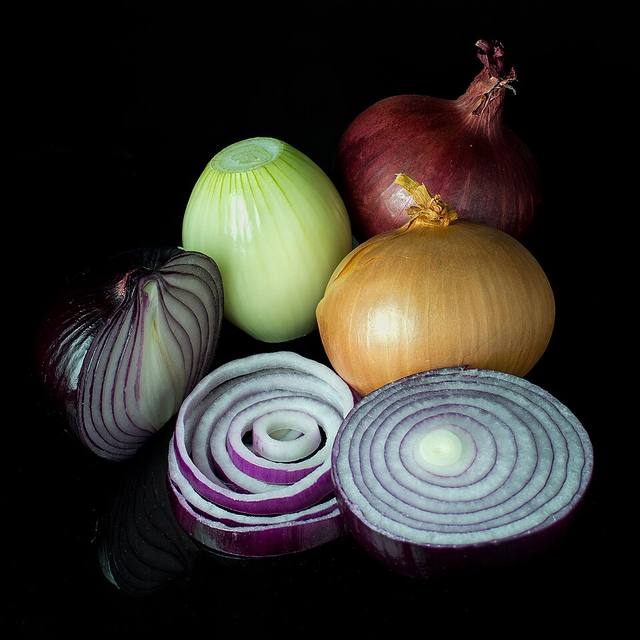
Photo: Colin · CC BY-SA 3.0 · Wikimedia Commons

Onion
Allium cepa
Also called Bulb onion, Common onion
Vegetable · Family Amaryllidaceae · Native to Central Asia (origin unknown in the wild)
A bulb vegetable grown from seed, sets (small bulbs) or transplants. It is among the easiest crops in the vegetable garden and stores well after harvest.
Toxic to cats and dogs
Toxic principle: N-propyl disulfide
Signs: Vomiting, breakdown of red blood cells (hemolytic anemia, Heinz body anemia), blood in urine, weakness, high heart rate, panting
Care
Light
Full sun
Full sun, at least 6 hours. Onions are weak competitors, so keep the bed weed-free and unshaded.
Water
About every 7 days
Water about weekly during bulb growth, then stop when the tops fall over so bulbs ripen. Overwatering late causes rot. Sown or planted once a year, so the winter figure equals summer.
Water when the top 3 to 5 cm (1 to 2 in) of soil is dry
Humidity
Low humidity
Dry air is fine. Humid, wet weather encourages downy mildew.
Temperature
10 to 25 °C (50 to 77 °F)
Best at 10 to 25 °C (50 to 77 °F). Plants survive light frost to about -7 °C (19 °F); bulbs form in response to day length.
Soil
Fertile, well-drained, loose soil, pH 6 to 7, with plenty of compost, in a sunny, weed-free bed.
Feeding
Every 4 weeks in the growing season
Feed with a nitrogen-rich fertiliser every 3 to 4 weeks until the bulbs begin to swell; then stop.
Repotting
Annual (or biennial): plant new sets, seed or seedlings each year. Rotate the bed.
Pruning
Do not cut the tops. Once they flop over, lift the bulbs and dry them in the sun for 1 to 2 weeks before storing.
Propagation
Plant sets 2.5 cm (1 in) deep and 10 cm (4 in) apart in spring, or sow seed indoors in winter. Sets are the easiest start.
Size
30 to 60 cm (12 to 24 in)
Medium growth
Outdoors
USDA zones 3 to 9
Grown as an annual in the ground, in full sun. Sets are planted in spring; some types are sown in late summer and overwinter.
Eating
The bulb and green leaves
Toxic to cats and dogs; do not feed onion to pets.
Common problems
Flower stalk appears
Bolting
Pinch the stalk and use that onion first; plant sets, not old bulbs, in cool weather.
Grey-white leaf patches, then collapse
Downy mildew
Improve airflow, water the soil and rotate crops.
Small bulbs
Weeds, crowding or poor soil
Weed, thin and feed in the growing season.
Soft neck, rotting in store
Cured poorly
Dry bulbs well in sun, store somewhere cool and airy.
White rot, yellow dying leaves
Soil fungus
Avoid the bed for 8 years; lift and bin affected plants.
Did you know?
Cutting an onion breaks cells and lets an enzyme turn a sulphur compound into a gas that irritates the eyes. Chilling the onion first slows that reaction.
General care information for a typical plant. Conditions in your home or garden may need a different rhythm.
Not sure what your plant is?
Identify a plant from a photoSee this guide in the appKagn Plants also keeps your own plants with watering reminders, and its plant doctor reads what is wrong with one.
Updated 22 November 2026.