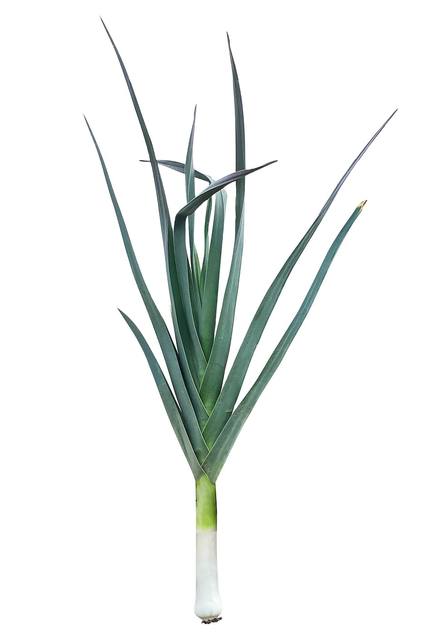
Photo: Amada44 · CC BY-SA 4.0 · Wikimedia Commons

Leek
Allium porrum
Also called Garden leek
Vegetable · Family Amaryllidaceae · Native to Mediterranean region (cultivated origin)
A hardy vegetable with a long, white and pale green stem and flat leaves. It is sown in spring, and harvested from autumn through winter.
Toxic to cats and dogs
Toxic principle: N-propyl disulfide
Signs: Vomiting, breakdown of red blood cells (hemolytic anemia), blood in urine, weakness, high heart rate, panting
Care
Light
Full sun
Grows best in full sun, at least 6 hours. It tolerates light shade but grows more slowly. Plants stay small with little light.
Water
About every 4 days in the growing season, every 10 in the cool season
Water deeply once a week in dry weather. Even moisture gives thick stems, and dry spells make them tough and woody. It overwinters in the ground, so water only when the soil is dry.
Water when the top 3 cm (1 in) of soil is dry
Humidity
Medium humidity
Normal outdoor humidity is fine. Rust is worse in damp, crowded beds.
Temperature
10 to 24 °C (50 to 75 °F)
Grows best at 10 to 24 °C (50 to 75 °F). Hardy leeks take frost down to about -15 °C (5 °F).
Soil
A deep, rich, firm soil with plenty of compost. It likes a pH of 6 to 7.5. It needs a sunny, open bed with good drainage.
Feeding
Every 3 weeks in the growing season
Feed every 3 weeks in summer with a balanced feed or a nitrogen-rich feed, until late summer. Stop feeding in autumn.
Repotting
Not repotted. Sow in spring each year, and transplant seedlings once into the bed.
Propagation
Sow seed indoors in late winter or outside in spring. Plant seedlings when pencil-thick into holes 15 cm (6 in) deep, and water them in. Blanch stems by earthing up.
Size
40 to 90 cm (16 to 35 in)
Medium growth
Outdoors
USDA zones 6 to 9
Grows outdoors in a sunny, rich bed as a spring-sown crop. Space plants 15 cm (6 in) apart in rows 30 cm (1 ft) apart.
Eating
White and pale green stems and leaf bases
ASPCA lists leek as toxic to cats and dogs, so keep leeks and trimmings away from pets.
Common problems
Orange pustules on leaves
Leek rust
Remove infected leaves, give plants more space and rotate crops yearly.
Thin stems
Crowding, dryness or hunger
Space plants, water evenly and feed in summer.
Stems rise into a flower stalk
Bolting
Plant at the right season and choose a hardy variety. Pick bolted leeks soon.
Tunnels in leaves, mined stems
Leek moth or allium leaf miner
Cover plants with a fine mesh in spring and early summer.
Short white stems
Not earthed up
Draw soil up around the stems or plant deeper to blanch more.
Did you know?
The leek is a national emblem of Wales, and is worn on St David's Day. Leeks have been grown for thousands of years.
General care information for a typical plant. Conditions in your home or garden may need a different rhythm.
Not sure what your plant is?
Identify a plant from a photoSee this guide in the appKagn Plants also keeps your own plants with watering reminders, and its plant doctor reads what is wrong with one.
Updated 22 November 2026.