Photo: Ivar Leidus · CC BY-SA 4.0 · Wikimedia Commons

Garlic
Allium sativum
Also called Cultivated garlic
Vegetable · Family Amaryllidaceae · Native to Central Asia
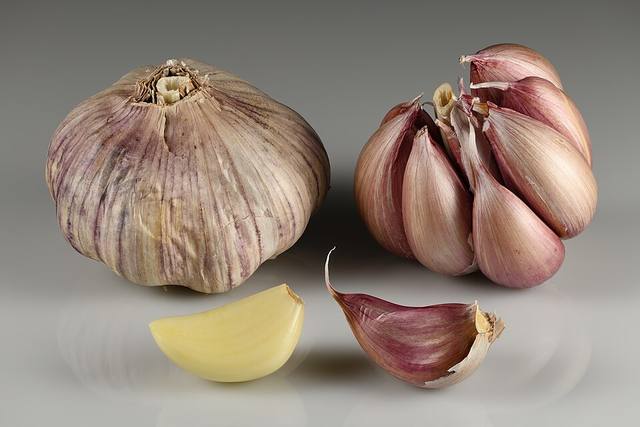
A bulb vegetable made of a head of cloves, grown for its strong flavour. It is planted in autumn or early spring and lifted the next summer.
Toxic to cats and dogs
Toxic principle: N-propyl disulfide
Signs: Vomiting, breakdown of red blood cells (hemolytic anemia, Heinz body anemia), blood in urine, weakness, high heart rate, panting
Care
Light
Full sun
Needs a sunny, open bed. Plants in shade make small bulbs and thin leaves. Leaves that yellow and fall over in early summer are a sign the bulbs are ready.
Water
About every 7 days in the growing season, every 14 in the cool season
Water about once a week in dry spells while the bulbs swell, then stop 2 to 3 weeks before harvest. Soil that stays wet causes rot and mould. Rain over winter is usually enough.
Water when the top 3 cm (1 in) of soil is dry
Humidity
Low humidity
Normal outdoor air is fine. Humidity does not matter, but damp, crowded beds invite rust and rot.
Temperature
0 to 25 °C (32 to 77 °F)
Cloves need a few weeks below 10 °C (50 °F) to form. Hardy to about -25 °C (-13 °F). Cure bulbs at 20 to 25 °C (68 to 77 °F).
Soil
Fertile, well-drained soil rich in compost, pH 6 to 7. Heavy wet clay rots the cloves, so raise the bed or add grit.
Feeding
Every 4 weeks in the growing season
Feed with a nitrogen-rich fertiliser every 4 weeks in spring while leaves grow. Stop feeding in early summer when the bulb is swelling.
Repotting
Not repotted: plant new cloves each year in autumn or early spring, in a fresh bed to avoid white rot.
Pruning
Snip off the curling flower stalk (scape) on hardneck types in early summer so the plant puts energy into the bulb. The scapes are edible.
Propagation
Break a bulb into cloves and plant each one 5 cm (2 in) deep, pointed end up, 10 to 15 cm (4 to 6 in) apart. Use cloves from a healthy bulb saved for planting.
Size
30 to 90 cm (12 to 35 in)
Medium growth
Outdoors
USDA zones 3 to 9
Plant in autumn (early spring in cold areas) in full sun, 10 to 15 cm (4 to 6 in) apart. Do not regrow in the same bed for 3 or 4 years.
Eating
The bulb (cloves) and the young green shoots and scapes
ASPCA lists garlic as toxic to cats and dogs, so keep bulbs and scraps away from pets.
Common problems
Yellow leaves with orange spots
Rust fungus
Remove badly affected leaves, space plants out and avoid wet leaves. Do not grow garlic or onions in the same bed next year.
Yellowing, soft, white-covered bulbs
White rot or overwatering
Lift and bin affected plants. Do not grow onion family crops there for many years; improve drainage.
Small bulbs with few cloves
Too little sun, crowding or dry soil
Plant in full sun, give each clove space and water during bulb swelling.
Bulbs that sprout or split
Planted too early or uneven watering
Plant at the right season and keep watering steady. Use split bulbs first.
Leaves yellow and die very early
Onion fly or a dry spell
Cover young plants with fine mesh and water in dry weather.
Did you know?
Garlic is nearly always grown from cloves, not seed, so one variety is a clone carried from field to field for centuries.
General care information for a typical plant. Conditions in your home or garden may need a different rhythm.
Not sure what your plant is?
Identify a plant from a photoSee this guide in the appKagn Plants also keeps your own plants with watering reminders, and its plant doctor reads what is wrong with one.
Updated 22 November 2026.