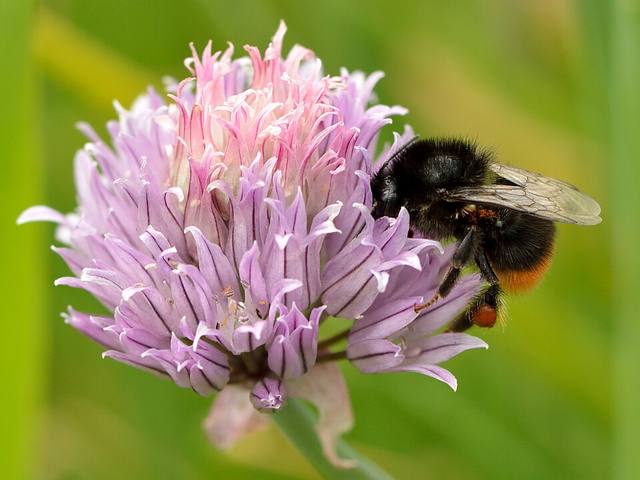
Photo: Ivar Leidus · CC BY-SA 4.0 · Wikimedia Commons

Chives
Allium schoenoprasum
Also called Chive, Garden chives
Herb · Family Amaryllidaceae · Native to Europe, Asia and North America
A clump-forming herb with thin, hollow, mild-onion leaves and round purple flower heads. It is easy in a pot or bed and comes back each spring.
Toxic to cats and dogs
Toxic principle: N-propyl disulfide
Signs: Vomiting, breakdown of red blood cells (hemolytic anemia, Heinz body anemia), blood in urine, weakness, high heart rate, panting
Care
Light
Full sun
Likes a sunny windowsill or bed, at least 6 hours of sun. In shade the leaves go thin and floppy. Leaves that turn yellow and flat in full sun usually mean it is too dry.
Water
About every 4 days in the growing season, every 10 in the cool season
Keep the soil lightly moist while it is growing, and do not let a pot dry out for long. Water at the base. In winter it rests and needs only a little water.
Water when the top 2 cm (1 in) of soil is dry
Humidity
Medium humidity
Average room humidity is fine. Indoors, a cool bright window beats a hot dry one.
Temperature
10 to 25 °C (50 to 77 °F)
Hardy to about -35 °C (-31 °F) outdoors and dies back in winter. Grows best at 10 to 25 °C (50 to 77 °F).
Soil
Moist, fertile, well-drained soil or potting compost, pH 6 to 7. A pot needs drainage holes.
Feeding
Every 6 weeks in the growing season
Feed every 6 weeks in spring and summer with a balanced feed, or top-dress with compost in spring.
Repotting
Every 3 years
Divide the clump every 3 years in spring or autumn, and repot into fresh compost. Crowded clumps lose vigour.
Pruning
Cut leaves 2 to 3 cm (1 in) above the soil to harvest; they regrow. Cut off flower stems after flowering for tender new leaves, or leave a few for the bees.
Propagation
Divide an established clump into pieces of a few bulblets each and replant. Seed also works and germinates in 2 to 3 weeks.
Size
20 to 40 cm (8 to 16 in)
Medium growth
Outdoors
USDA zones 3 to 9
Hardy perennial in a sunny bed, edging or pot. Plant 15 to 20 cm (6 to 8 in) apart. It dies back in winter and regrows each spring.
Eating
Leaves and the flowers
ASPCA lists chives as toxic to cats and dogs, so keep the pot out of pets' reach.
Common problems
Yellow or brown leaf tips
Dry soil, old leaves or sun scorch
Cut back to 3 cm (1 in), water well and keep it moist. New leaves regrow within weeks.
Orange spots on leaves
Rust fungus
Cut off and bin affected leaves, thin the clump and water at the base.
Thin, floppy, pale leaves
Not enough light
Move to a sunnier spot with at least 6 hours of sun.
Clump dying in the middle
Overcrowding
Lift, divide and replant the healthy outer parts into fresh soil.
Mushy, collapsing leaves
Waterlogged soil
Improve drainage and water less often.
Did you know?
Chive flowers are edible and taste of mild onion; the plant was grown in Europe and China for at least 5,000 years.
General care information for a typical plant. Conditions in your home or garden may need a different rhythm.
Not sure what your plant is?
Identify a plant from a photoSee this guide in the appKagn Plants also keeps your own plants with watering reminders, and its plant doctor reads what is wrong with one.
Updated 22 November 2026.