Photo: KENPEI · CC BY-SA 3.0 · Wikimedia Commons

Giant taro
Alocasia macrorrhizos
Also called Giant elephant ear, Upright elephant ear, Ape
Houseplant · Family Araceae · Native to Tropical Asia and Australasia
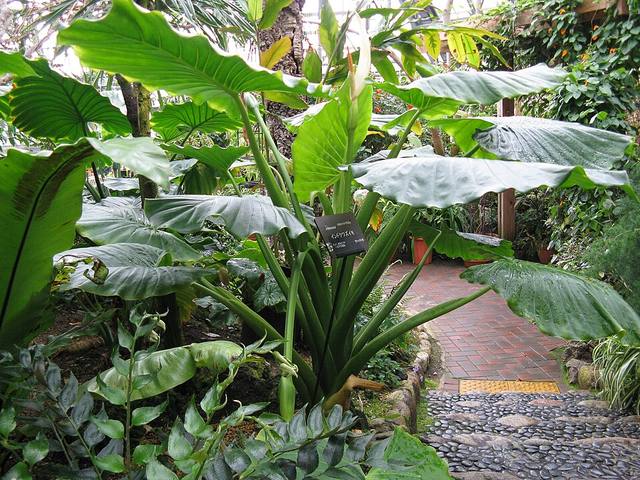
A very large tropical plant with huge, upright, arrow-shaped leaves that can reach over a metre. It needs plenty of space and warmth.
Toxic to cats and dogs
Toxic principle: Insoluble calcium oxalates
Signs: Oral irritation, pain and swelling of mouth, tongue and lips, excessive drooling, vomiting, difficulty swallowing
Care
Light
Bright, indirect light
Bright light with some morning sun suits it. In deep shade it gets leggy. Strong midday sun can burn the leaves.
Water
About every 5 days in the growing season, every 10 in the cool season
It drinks heavily in warm weather, so water deeply and often while it is growing. Reduce water in winter, when it grows slowly and the leaves may die back.
Water when the top 3 cm (1 in) of soil is dry
Humidity
High humidity
It prefers humid air. Brown edges and curling leaves show dry air.
Temperature
18 to 30 °C (64 to 86 °F)
Keep it at 18 to 30 °C (64 to 86 °F). Leaves die back below about 10 °C (50 °F), and frost kills it.
Soil
A rich, moisture-holding but well-drained mix with compost and perlite. Use a big, heavy pot with drainage holes, because it grows large and tall.
Feeding
Every 3 weeks in the growing season
Feed every 3 weeks in the growing season with a balanced fertiliser, since it grows quickly. Do not feed in winter.
Repotting
Every 2 years
Repot every 1 to 2 years in spring into a larger, heavy pot. Divide the clump if it outgrows its space.
Pruning
Cut off old leaves at the base. Wear gloves, because the sap irritates skin.
Propagation
Divide offsets with roots from the base of the clump in spring and pot them in moist, rich mix.
Size
150 to 400 cm (59 to 157 in)
Fast growing
Outdoors
USDA zones 10 to 12
Grown outdoors in frost-free, warm, humid gardens in sun or part shade, with a wide spacing of 1.5 m (5 ft). It spreads by suckers.
Common problems
Yellow leaves
Overwatering or the plant is cold
Keep it warm and let the top dry slightly between waterings.
Brown, crispy edges
Dry air or too little water
Water deeper and raise humidity.
Leaves flop over
Not enough light or support
Move to brighter light. Mature leaves are heavy, so give the plant space.
Spots of rot at the base
Overwatering and cold
Let it dry, use a draining pot and keep it warm.
Webbing on the leaf undersides
Spider mites
Rinse leaves with water and wipe weekly.
Did you know?
A single leaf can grow over 1 m (3 ft) long, and the plant can reach 4 m (13 ft) in the tropics. It is one of the largest leafy houseplants.
General care information for a typical plant. Conditions in your home or garden may need a different rhythm.
Not sure what your plant is?
Identify a plant from a photoSee this guide in the appKagn Plants also keeps your own plants with watering reminders, and its plant doctor reads what is wrong with one.
Updated 22 November 2026.