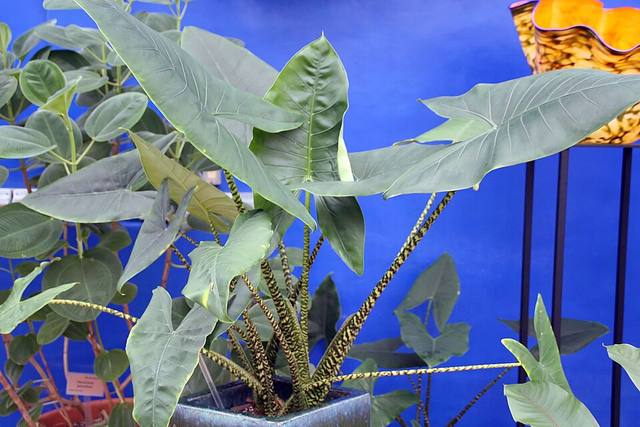
Photo: Photo by David J. Stang · CC BY-SA 4.0 · Wikimedia Commons

Zebra elephant ear
Alocasia zebrina
Also called Zebra alocasia, African mask zebrina, Tiger elephant ear
Houseplant · Family Araceae · Native to Philippines
An upright plant with arrow-shaped leaves on tall stalks that are striped like a zebra. It is dramatic but fussy about water and warmth.
Toxic to cats and dogs
Toxic principle: Insoluble calcium oxalates
Signs: Oral irritation, pain and swelling of mouth, tongue and lips, excessive drooling, vomiting, difficulty swallowing
Care
Light
Bright, indirect light
Bright, indirect light. Direct sun scorches the leaves. Weak, leaning growth and loss of the stalk stripes mean too little light.
Water
About every 7 days in the growing season, every 14 in the cool season
Water evenly while it grows, and keep it only lightly moist. Do not leave it wet, because the tubers rot. It may lose leaves and rest in winter, so water much less then.
Water when the top 3 cm (1 in) of soil is dry
Humidity
High humidity
It likes 60 percent humidity or more. Brown leaf edges mean the air is dry.
Temperature
18 to 29 °C (64 to 84 °F)
Keep it at 18 to 29 °C (64 to 84 °F). Damage begins below about 12 °C (54 °F), and cold makes it drop leaves.
Soil
A loose, well-drained mix of potting soil, perlite and bark. Use a pot with drainage holes, and do not bury the tuber too deeply.
Feeding
Every 4 weeks in the growing season
Feed every 4 weeks in spring and summer with a half-strength houseplant fertiliser. Do not feed in winter.
Repotting
Every 2 years
Repot every 2 years in spring into a pot one size up. Divide the tubers or offsets if the clump is crowded.
Pruning
Cut off old yellow leaves at the base. It is common for the oldest leaf to die as a new one opens.
Propagation
Divide the clump in spring, separating pups with roots from the main plant and potting them separately.
Size
60 to 150 cm (24 to 59 in)
Medium growth
Outdoors
USDA zones 10 to 12
Can be grown outdoors in frost-free, humid places in part shade. Elsewhere it is a houseplant or a summer patio plant.
Common problems
Yellow leaves
Overwatering or the plant is resting
Cut back watering and check drainage. Winter leaf loss is normal.
Brown crispy edges
Dry air
Raise humidity and avoid heaters.
Drooping stalks
Too little light or thirst
Move to brighter light and water when the top is dry.
Tiny webs under the leaves
Spider mites
Rinse the leaves and wipe the undersides, then repeat weekly.
Sudden leaf drop
Cold or a drafty spot
Keep it warm and away from windows and vents.
Did you know?
The striped stalks are the point of the plant: the leaf stalk pattern, not the leaves, gives zebra its name.
General care information for a typical plant. Conditions in your home or garden may need a different rhythm.
Not sure what your plant is?
Identify a plant from a photoSee this guide in the appKagn Plants also keeps your own plants with watering reminders, and its plant doctor reads what is wrong with one.
Updated 22 November 2026.