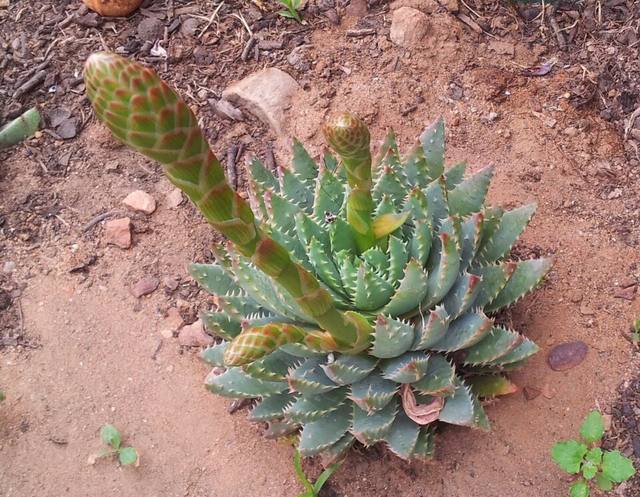
Photo: Abu Shawka · CC BY-SA 4.0 · Wikimedia Commons

Short-leaved aloe
Aloe brevifolia
Also called Short-leaf aloe, Blue aloe
Succulent or cactus · Family Asphodelaceae · Native to Western Cape, South Africa
A small, blue-grey aloe with short, thick, toothed leaves in a neat rosette, forming clumps. It sends up orange-red flowers in winter and is easy to keep.
The ASPCA lists a close relative, aloe (Aloe vera), as toxic to cats and dogs: treat this plant the same.
Care
Light
Full sun
Give it full sun, at least 4 to 6 hours. Leaves that go green or floppy and a loose rosette mean too little light. It colours up red in strong sun.
Water
About every 14 days in the growing season, every 30 in the cool season
Water well, then let it dry fully. It stores water in its thick leaves. The commonest mistake is overwatering, which rots the base. Water far less in winter.
Water when the mix is completely dry, usually every 2 weeks
Humidity
Low humidity
Dry air is fine. Avoid damp, still air.
Temperature
10 to 30 °C (50 to 86 °F)
Grows best at 10 to 30 °C (50 to 86 °F). Leaves are damaged by frost, and wet roots in cold rot.
Soil
A gritty cactus mix with extra grit or pumice. The pot must drain. A shallow terracotta pot suits it.
Feeding
Every 8 weeks in the growing season
Feed every 8 weeks in spring and summer with a cactus feed at half strength, or only 2 or 3 times a year. Do not feed in winter.
Repotting
Every 2 years
Repot every 2 years in spring. A clump fills a wide pot in a few years.
Pruning
Cut off the flower stem when the flowers fade. Remove dead leaves at the base.
Propagation
Pull off offsets with some roots in spring, let the cut end dry for 2 days and pot them in gritty mix. It also grows from seed.
Size
10 to 30 cm (4 to 12 in)
Slow growing
Outdoors
USDA zones 9 to 11
Grows outdoors in frost-free gardens in full sun and sharp drainage. In cold winters keep it in a pot and bring it in.
Common problems
Black, soft base
Root rot from overwatering
Cut away rot, let it dry for a week and repot in dry gritty mix.
Leaves go green and floppy
Too little light
Move it to full sun.
Wrinkled leaves
Underwatering
Water well, then let it dry again.
White cottony patches
Mealybugs
Dab with alcohol on a cotton bud and repeat weekly.
Brown scorched patches
Sudden strong sun
Acclimatise it to full sun slowly.
Did you know?
Its clumps can grow into mats up to 1 m (3 ft) across in the wild. The leaf edges carry small white teeth, and the winter flowers are rich in nectar.
General care information for a typical plant. Conditions in your home or garden may need a different rhythm.
Not sure what your plant is?
Identify a plant from a photoSee this guide in the appKagn Plants also keeps your own plants with watering reminders, and its plant doctor reads what is wrong with one.
Updated 22 November 2026.