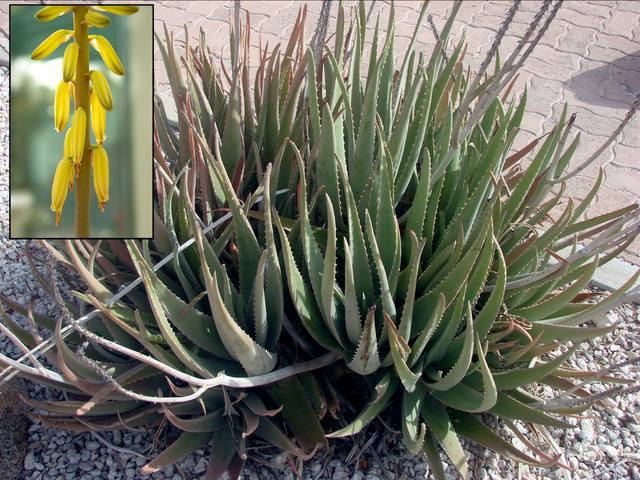
Photo: Collage by en:User:MidgleyDJ, original images from Wikimedia commons (Image:Aloe_vera_offsets.jpg and Image:Aloe_vera_C.jpg) · CC BY-SA 3.0 · Wikimedia Commons

Aloe vera
Aloe vera
Also called Aloe, True aloe, Medicinal aloe
Succulent or cactus · Family Asphodelaceae · Native to Arabian Peninsula (long cultivated worldwide)
A rosette succulent with thick, spiky leaves full of clear gel. People grow it as a tough sun-loving houseplant and for its soothing gel.
Toxic to cats and dogs
Toxic principle: Saponins, anthraquinones
Signs: Vomiting, lethargy, diarrhea. ASPCA notes the gel is considered edible
Care
Light
Full sun
Give as much bright light as you can, ideally a sunny south or west window. Thin, leaning, pale leaves mean too little light.
Water
About every 16 days in the growing season, every 35 in the cool season
Water deeply, then let the pot dry out completely. Plump leaves mean it has enough; a wet pot in cool weather rots the roots.
Water when the soil is dry all the way down
Humidity
Low humidity
Dry air suits it. Avoid damp, stuffy rooms.
Temperature
13 to 29 °C (55 to 84 °F)
Best at 13 to 29 °C (55 to 84 °F). Frost damages it; bring it in below 4 °C (39 °F).
Soil
Gritty cactus mix with extra grit or perlite. Use a terracotta pot with a drainage hole so the soil dries quickly.
Feeding
Every 8 weeks in the growing season
Feed once or twice in spring and summer with a half-strength cactus fertiliser. None in winter.
Repotting
Every 2 years
Repot every 2 years in spring or when pups crowd the pot. Pick a heavy, wide, shallow pot.
Pruning
Cut off dead or damaged outer leaves at the base. Trim spent flower stalks.
Propagation
Twist or cut off the offsets (pups) with roots when they are a few cm tall and pot them in dry mix. Leaves do not root.
Size
30 to 60 cm (12 to 24 in)
Slow growing
Outdoors
USDA zones 9 to 11
Grows outdoors in frost-free, dry climates in full sun and sharp drainage. Elsewhere summer outside, then bring in.
Eating
Inner clear gel of the leaf
The yellow sap under the skin is a strong laxative; peel and rinse the gel.
Common problems
Soft, brown or mushy leaves
Overwatering or rot
Stop watering; unpot, trim rotten roots and repot in dry gritty mix.
Thin, floppy, leaning leaves
Not enough light
Move to the sunniest window.
Brown or red-tinged leaves
Strong sun or drought stress
Acclimatise slowly to sun; water deeply if the soil is bone dry.
Flat, shrivelled leaves
Too dry for too long
Give a deep watering and check the roots.
White cottony spots
Mealybugs
Dab with rubbing alcohol on a cotton bud, repeat weekly.
Did you know?
Aloe vera has not been found growing wild anywhere with certainty. It may be a very old hybrid that people have been moving around for thousands of years.
General care information for a typical plant. Conditions in your home or garden may need a different rhythm.
Not sure what your plant is?
Identify a plant from a photoSee this guide in the appKagn Plants also keeps your own plants with watering reminders, and its plant doctor reads what is wrong with one.
Updated 22 November 2026.