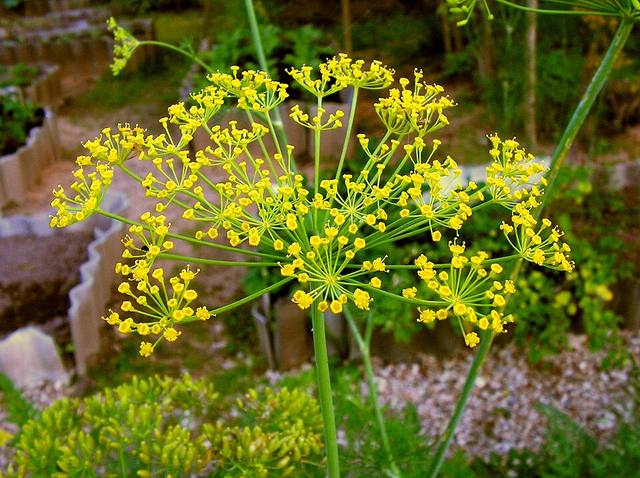
Photo: Bff · CC BY-SA 3.0 · Wikimedia Commons

Dill
Anethum graveolens
Also called Dill weed, Garden dill
Herb · Family Apiaceae · Native to Southwest Asia and the Mediterranean
A tall, feathery annual herb used fresh on fish and in pickles, with yellow flower heads and aromatic seeds. It grows fast from seed in one season.
The ASPCA lists this plant as non-toxic to cats and dogs
Care
Light
Full sun
Needs full sun, at least 6 hours a day. In shade it goes weak and leaning. Sheltered spots stop tall stems blowing over.
Water
About every 4 days
Water regularly in dry spells; do not let it dry out. Uneven watering triggers bolting. As an annual it is not alive in winter, so winter_days is the same as summer.
Water when the top 2 cm (1 in) of soil is dry
Humidity
Medium humidity
Ordinary outdoor air is fine. It dislikes hot, dry wind.
Temperature
10 to 25 °C (50 to 77 °F)
Frost kills it, though seedlings survive about -3 °C (27 °F). Best at 10 to 25 °C (50 to 77 °F). Above 30 °C (86 °F) it bolts.
Soil
Fertile, light, well-drained soil, pH 5.5 to 6.5. It has a taproot, so give a deep pot or bed.
Feeding
Little feeding needed. Enrich the bed with compost before sowing; heavy feeding gives more leaf and less flavour.
Repotting
Not repotted: sow where it will grow, because the taproot resents moving. Sow again every 3 weeks for a steady crop.
Pruning
Pinch out the tips to delay flowering. Cut whole stems for seed heads when the seeds turn brown. Stake tall plants.
Propagation
Sow seed directly 5 mm (1/4 in) deep from spring to midsummer, and thin to 20 cm (8 in). It self-seeds freely.
Size
60 to 150 cm (24 to 59 in)
Fast growing
Outdoors
USDA zones 2 to 11
Annual: sow in spring after frost in a sunny, sheltered spot. Keep away from fennel, which crosses with it and spoils the flavour.
Eating
Leaves (dill weed) and seeds
Both are safe in ordinary food amounts.
Common problems
Plants flower early and go to seed
Bolting in heat or dry spells
Sow in succession, water steadily and give afternoon shade in hot weather.
Tall stems fall over
Wind or lack of support
Plant in a sheltered spot, in blocks, and tie loosely.
Striped green caterpillars
Swallowtail butterfly larvae
Leave a few for butterflies or pick off by hand.
Green aphids on stems
Aphids
Wash off with water or rub off by hand.
Seedlings wilt or die
Damping off or moving them
Sow direct in clean, well-drained soil and avoid overwatering.
Did you know?
Dill leaves, flowers and seeds are all used, and a whole stem with a seed head is the traditional flavouring for dill pickles.
General care information for a typical plant. Conditions in your home or garden may need a different rhythm.
Not sure what your plant is?
Identify a plant from a photoSee this guide in the appKagn Plants also keeps your own plants with watering reminders, and its plant doctor reads what is wrong with one.
Updated 22 November 2026.