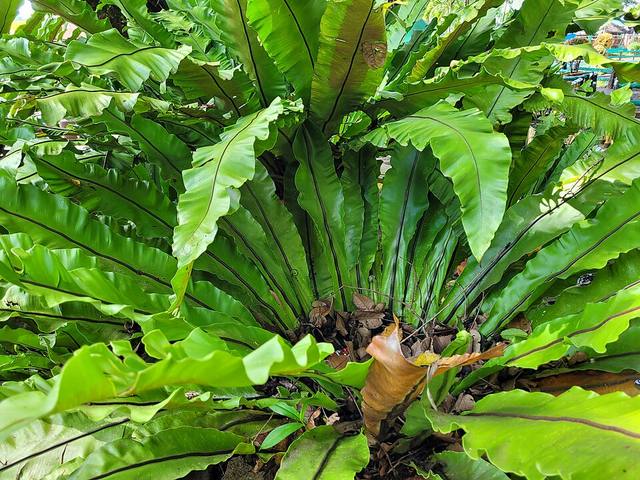
Photo: Obsidian Soul · CC0 · Wikimedia Commons

Bird's nest fern
Asplenium nidus
Also called Nest fern, Crispy wave fern
Houseplant · Family Aspleniaceae · Native to Tropical Asia, Australia and Africa
A fern with bright green, undivided, strap-like fronds that form a nest-like rosette. It is easier to keep than most ferns, because it tolerates normal rooms.
Not on the ASPCA's list: keep it out of reach of pets.
Care
Light
Medium light
Medium to bright indirect light, with no direct sun, which scorches the fronds. Pale fronds point to too much light; slow, dark growth means too little.
Water
About every 7 days in the growing season, every 12 in the cool season
Water around the edge of the pot, not into the centre, where the fronds rise, as it rots there. Keep the soil lightly damp but never soggy.
Water when the top 3 cm (1 in) of soil is dry
Humidity
High humidity
Likes humid air. Brown frond tips show dry air: a bathroom or humidifier suits it. Do not mist the centre.
Temperature
18 to 27 °C (64 to 81 °F)
Best at 18 to 27 °C (64 to 81 °F). It is damaged below about 10 °C (50 °F) and dislikes cold draughts.
Soil
A light, airy mix: peat-free compost with orchid bark and perlite. The pot must drain, and the plant should sit at the same level in it.
Feeding
Every 6 weeks in the growing season
Feed at half strength every 6 weeks in spring and summer. Overfeeding burns the roots and frond tips.
Repotting
Every 3 years
It is slow and likes to be tight in its pot. Repot every 2 to 3 years in spring, only if roots fill the pot.
Pruning
Remove brown or damaged old fronds at the base. Never cut the central bud.
Propagation
It does not produce offsets and is hard to propagate at home. It is usually bought as a plant; spores can be grown but take months.
Size
30 to 90 cm (12 to 35 in)
Medium growth
Outdoors
USDA zones 10 to 12
Frost-free tropical climates, in shade on a tree trunk or moist, humus-rich ground. Elsewhere grow it indoors.
Common problems
Brown frond tips
Dry air or salts
Raise humidity and flush the pot with water occasionally.
Black, soft centre
Water in the nest
Water only around the edges and let the centre stay dry.
Pale or scorched fronds
Too much sun
Move to bright indirect light.
Yellowing, drooping fronds
Overwatering or cold
Let the top dry between waterings and keep it above 10 °C (50 °F).
Fronds covered in small brown bumps
Scale insects
Wipe off with a cotton bud dipped in rubbing alcohol; repeat weekly.
Did you know?
In the wild it grows on tree trunks high in the rainforest. The nest of fronds catches fallen leaves, and the plant feeds on the rotting litter.
General care information for a typical plant. Conditions in your home or garden may need a different rhythm.
Not sure what your plant is?
Identify a plant from a photoSee this guide in the appKagn Plants also keeps your own plants with watering reminders, and its plant doctor reads what is wrong with one.
Updated 22 November 2026.