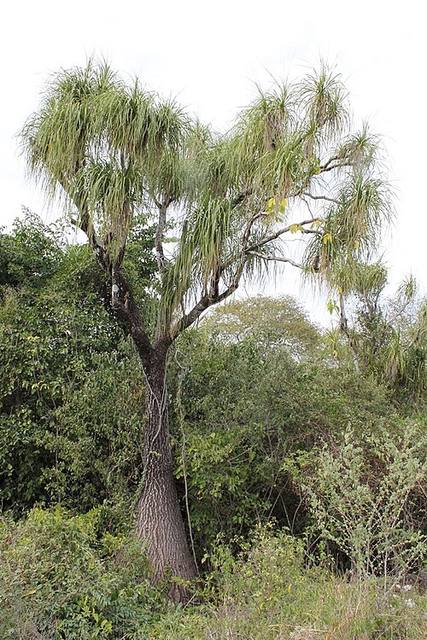
Photo: juancruzado · CC BY-SA 4.0 · Wikimedia Commons

Ponytail palm
Beaucarnea recurvata
Also called Elephant's foot, Bottle palm, Pony tail
Houseplant · Family Asparagaceae · Native to Eastern Mexico
A swollen, bulb-like trunk topped with a fountain of long, curling green leaves. It is slow, tidy and stores water, so it forgives forgetful owners.
The ASPCA lists this plant as non-toxic to cats and dogs
Care
Light
Bright, indirect light
Bright light with a few hours of direct sun is best. Leaves that thin out and pale mean too little light. A sudden move into hard summer sun can leave brown scorch marks.
Water
About every 18 days in the growing season, every 35 in the cool season
Soak the pot, let it drain, then wait until it is fully dry. The fat trunk holds spare water, so a missed week does no harm, but wet soil rots it fast. Water less in winter.
Water when the soil is dry all the way down
Humidity
Low humidity
Ordinary dry home air suits it. Brown leaf tips come from irregular watering or fluoride in tap water, not dry air.
Temperature
15 to 30 °C (59 to 86 °F)
Keep it at 15 to 30 °C (59 to 86 °F). Leaves are damaged below about 7 °C (45 °F), so keep it indoors in winter.
Soil
A fast-draining cactus or succulent mix with extra grit or perlite. Use a shallow, wide pot with drainage holes, because the roots spread sideways.
Feeding
Every 8 weeks in the growing season
Feed every 8 weeks from spring to late summer with a half-strength houseplant fertiliser. Do not feed in winter.
Repotting
Every 3 years
Repot every 3 years or so, only when the trunk fills the pot. It likes being snug. Go up one size, into a wide, shallow pot.
Pruning
Snip brown leaf tips with scissors, following the leaf shape. Cut off dead lower leaves. Chopping the top of the trunk makes it branch but leaves a scar, so only do it on purpose.
Propagation
Slice off the small pups that grow at the base of an older plant when they have a few roots. Pot them in gritty mix. Seed works but is very slow.
Size
60 to 180 cm (24 to 71 in)
Slow growing
Outdoors
USDA zones 9 to 11
Grows outdoors in full sun in frost-free, dry climates. Keep it in a pot elsewhere and bring it in before the first cold nights.
Common problems
Soft, squashy trunk base
Overwatering and root rot
Stop watering. If the base is mushy, the plant is usually lost; if only a little is soft, repot into dry gritty mix and wait.
Brown, crispy leaf tips
Uneven watering or tap-water minerals
Water deeply and less often. Trim the tips and try rainwater or filtered water.
Lower leaves turn brown and fall
Natural ageing
Pull off dead leaves. Only worry if many leaves drop at once, which usually means a watering problem.
Pale, thin, floppy leaves
Not enough light
Move to the brightest spot you have, with some direct sun.
White cottony fluff in leaf bases
Mealybugs
Dab with a cotton bud dipped in rubbing alcohol and repeat weekly until gone.
Did you know?
It is not a palm at all: it belongs to the asparagus family. The swollen base is a water store that lets it survive long droughts in the wild.
General care information for a typical plant. Conditions in your home or garden may need a different rhythm.
Not sure what your plant is?
Identify a plant from a photoSee this guide in the appKagn Plants also keeps your own plants with watering reminders, and its plant doctor reads what is wrong with one.
Updated 22 November 2026.