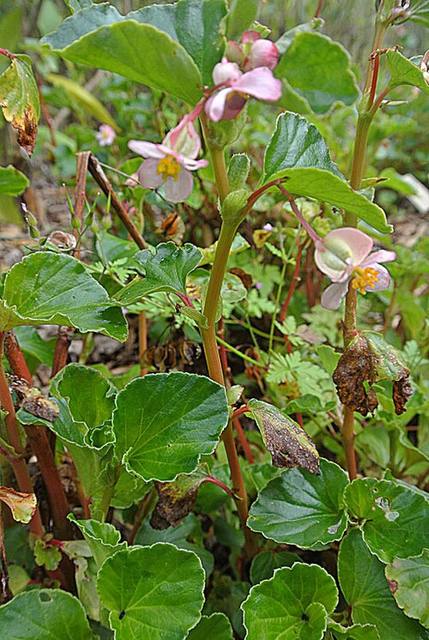
Photo: Dick Culbert from Gibsons, B.C., Canada · CC BY 2.0 · Wikimedia Commons

Wax begonia
Begonia semperflorens
Also called Bedding begonia, Fibrous begonia
Garden flower · Family Begoniaceae · Native to Garden hybrid of Brazilian species
A neat, rounded bedding plant with waxy green or bronze leaves and small flowers in pink, red or white. It flowers non-stop from late spring to frost, in sun or part shade.
Toxic to cats and dogs
Toxic principle: Soluble calcium oxalates
Signs: Kidney failure (in grazing animals), vomiting, salivation in dogs/cats. Most toxic part is underground.
Care
Light
Part sun
Part sun to light shade. Bronze-leaved types take more sun than green-leaved ones. Leaves that go red or scorched mean too much hot sun.
Water
About every 4 days in the growing season, every 7 in the cool season
Water the soil, not the leaves. Wet soil and wet leaves rot the stems. The fleshy stems store some water, so a dry spell does less harm than too much water.
Water when the top 2 cm (1 in) of soil is dry
Humidity
Medium humidity
Average air is fine. Wet leaves and poor air flow bring mildew.
Temperature
16 to 27 °C (61 to 81 °F)
Grows best at 16 to 27 °C (61 to 81 °F). It is damaged below about 5 °C (41 °F), and frost kills it.
Soil
Light, rich, well-drained soil or potting mix with compost. Slightly acid to neutral. Pots must drain well.
Feeding
Every 4 weeks in the growing season
Feed every 4 weeks with a diluted flower feed in summer.
Repotting
Not repotted. Plant new ones each spring after frost, or lift a few in autumn and bring them inside.
Pruning
Pinch tips of young plants to make them bushy. Cut back leggy stems by half in summer. Remove dead flowers.
Propagation
Take 8 cm (3 in) tip cuttings in late summer and root them in damp mix for winter. Seed is dust-fine and slow, so most people buy plants.
Size
15 to 30 cm (6 to 12 in)
Medium growth
Outdoors
USDA zones 10 to 11
Grown as an annual elsewhere. Plant out after the last frost, 15 to 20 cm (6 to 8 in) apart, in sun or part shade.
Common problems
Stems turn black and soft at the base
Rot from too much water
Water less and avoid wetting the stems. Remove rotted plants.
White powder on leaves
Powdery mildew
Give more space and keep leaves dry.
Leaves scorched or red-tinted
Too much hot sun
Move to part shade.
Leggy with few flowers
Too little light
Move to brighter light and pinch back.
Leaves chewed
Slugs and caterpillars
Pick them off by hand.
Did you know?
Semperflorens means always flowering, and its small flowers really do keep coming through the whole warm season.
General care information for a typical plant. Conditions in your home or garden may need a different rhythm.
Not sure what your plant is?
Identify a plant from a photoSee this guide in the appKagn Plants also keeps your own plants with watering reminders, and its plant doctor reads what is wrong with one.
Updated 22 November 2026.