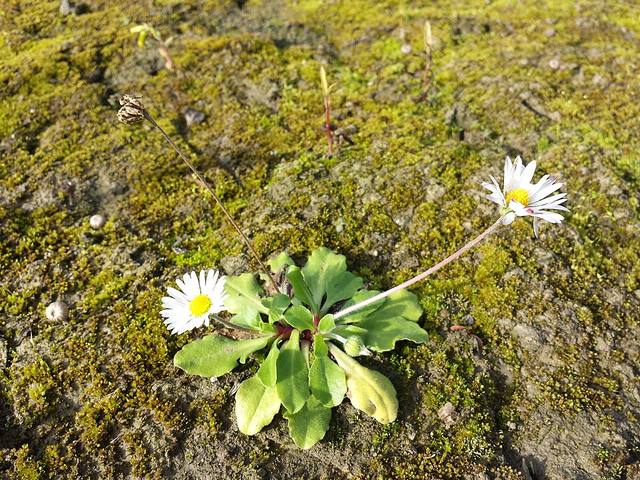
Photo: Stefan.lefnaer · CC BY-SA 4.0 · Wikimedia Commons

Common daisy
Bellis perennis
Also called English daisy, Lawn daisy, Garden daisy
Lawn weed · Family Asteraceae · Native to Europe and western Asia; naturalised widely
A low rosette plant with white, yellow-centred flowers that close at night. It blooms in lawns from spring to autumn. Many people like it, and others pull it, since mowing does not remove it.
Not on the ASPCA's list: keep it out of reach of pets.
Care
Light
Full sun
Likes sun and open lawns. It grows in part shade but flowers less. Flowers open in daylight and close at dusk.
Water
About every 10 days in the growing season, every 14 in the cool season
A lawn daisy needs no extra water. In long dry spells the leaves shrivel but the roots revive when rain returns. Watering the lawn does not remove it.
Not needed: it grows in lawns on rain
Humidity
Medium humidity
Normal outdoor humidity is fine.
Temperature
8 to 22 °C (46 to 72 °F)
Grows best at 8 to 22 °C (46 to 72 °F). It stays green in mild winters and survives frost to about -20 °C (-4 °F).
Soil
Grows on most soils, often on compacted or low-fertility lawns that are mown short. Adding nitrogen and mowing higher thins it.
Feeding
Do not feed it. A well-fed, thick lawn grass crowds it out. Feed the lawn in spring and autumn if you want to reduce daisies.
Repotting
Nothing to repot. In a bed or pot, divide clumps every 2 years after flowering.
Pruning
Mow the lawn high, 5 to 7 cm (2 to 3 in), and daisies flower less. To remove a few, cut under the rosette with a knife and take out the root. Or leave it: it feeds early bees.
Propagation
It spreads by seed and by short runners. Garden types are grown from seed in summer or divided after flowering. To remove a plant, dig out the whole rosette and root.
Size
5 to 15 cm (2 to 6 in)
Medium growth
Outdoors
USDA zones 4 to 10
Grows in lawns, meadows and paths across Europe and many temperate areas. Cultivated double daisies are used in spring bedding. Hardy and easy.
Eating
Young leaves and flower buds
Flowers and young leaves are edible in small amounts, but use only plants grown without sprays.
Common problems
White flowers scattered across the lawn
Common daisy
Mow higher so grass shades the rosettes, or dig each one with a knife. Or leave them for bees.
It comes back after mowing
Rosette sits below the mower blade
Mowing does not remove it. Dig it out or feed the lawn to thicken the grass.
Bare patches after digging
Plants removed from thin lawn
Rake and sow lawn seed over the gaps and keep damp for 3 weeks.
Cultivated daisies look weak
Hot, dry weather
Move them to part shade and keep the soil damp after flowering.
Did you know?
The name is a short form of day's eye: the flower closes at dusk and opens at dawn, and Chaucer wrote about it.
General care information for a typical plant. Conditions in your home or garden may need a different rhythm.
Not sure what your plant is?
Identify a plant from a photoSee this guide in the appKagn Plants also keeps your own plants with watering reminders, and its plant doctor reads what is wrong with one.
Updated 22 November 2026.