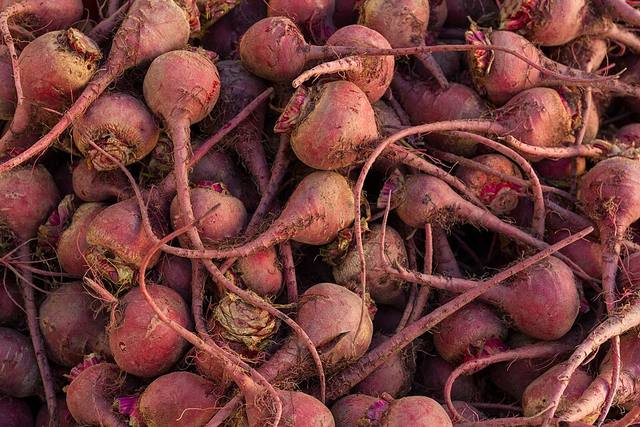
Photo: Frank Schulenburg · CC0 · Wikimedia Commons

Beetroot
Beta vulgaris
Also called Chard, Swiss chard, Beet, Red beet, Table beet
Vegetable · Family Amaranthaceae · Native to Mediterranean and western Europe
One species with two crops: beetroot, grown for its sweet red root, and chard, grown for its ribbed leaves. Both are easy cool-season crops.
The ASPCA lists this plant as non-toxic to cats and dogs
Care
Light
Full sun
Grows best in full sun but tolerates part shade, especially chard. In shade beetroot makes big leaves and small roots.
Water
About every 5 days in the growing season, every 10 in the cool season
Water evenly. Dry spells then a soak make roots woody or split. Water in dry weather, and give chard more. Winter days are for chard, which keeps growing in mild winters.
Water when the top 3 cm (1 in) of soil is dry
Humidity
Medium humidity
Outdoor air is fine. Damp, cool weather suits it, though wet leaves may spot.
Temperature
10 to 25 °C (50 to 77 °F)
Hardy to about -5 °C (23 °F); chard is hardier. Best at 10 to 25 °C (50 to 77 °F). Cold snaps after sowing can make plants bolt.
Soil
Fertile, light, well-drained soil without stones, pH 6.5 to 7.5. It dislikes acid soil.
Feeding
Do not feed beetroot much; too much nitrogen makes leaves, not roots. Chard likes a balanced feed every 4 weeks.
Repotting
Not repotted: sow where it will grow, or in deep pots. Beetroot 'seeds' are clusters, so thin the seedlings to one each.
Pruning
No pruning. Thin seedlings to 8 to 10 cm (3 to 4 in) for beetroot, 25 cm (10 in) for chard. Twist off leaves to harvest; do not cut beetroot tops, which makes it bleed.
Propagation
Sow seed 2 cm (3/4 in) deep from spring to midsummer, thin to the final spacing. Soak seed overnight to speed germination.
Size
30 to 60 cm (12 to 24 in)
Medium growth
Outdoors
USDA zones 2 to 10
Annual or biennial crop in a sunny bed or deep pot. Sow from spring to midsummer. Chard can be picked for most of a year.
Eating
Roots (beetroot) and leaves (chard and beet tops)
The leaves of both are edible. They are high in oxalates, as with spinach. Beetroot can turn urine pink, which is harmless.
Common problems
Several seedlings from each seed
Seed is a cluster of seeds
Thin to one seedling each; use the thinnings as baby leaves.
Woody or split roots
Dry spells followed by heavy watering
Water evenly and pick at golf ball to tennis ball size.
Brown or tan blotches on leaves
Leaf miner or leaf spot
Pick off affected leaves and keep plants well spaced.
Poor, tiny roots
Acid soil, shade or crowding
Check pH, give sun and thin early.
Plants run to seed in the first year
Bolting after cold weather
Sow after the coldest weather or use bolt-resistant varieties.
Did you know?
Beetroot, sugar beet, chard and mangold all belong to Beta vulgaris; the sugar beet gives about a fifth of the world's sugar.
General care information for a typical plant. Conditions in your home or garden may need a different rhythm.
Not sure what your plant is?
Identify a plant from a photoSee this guide in the appKagn Plants also keeps your own plants with watering reminders, and its plant doctor reads what is wrong with one.
Updated 22 November 2026.