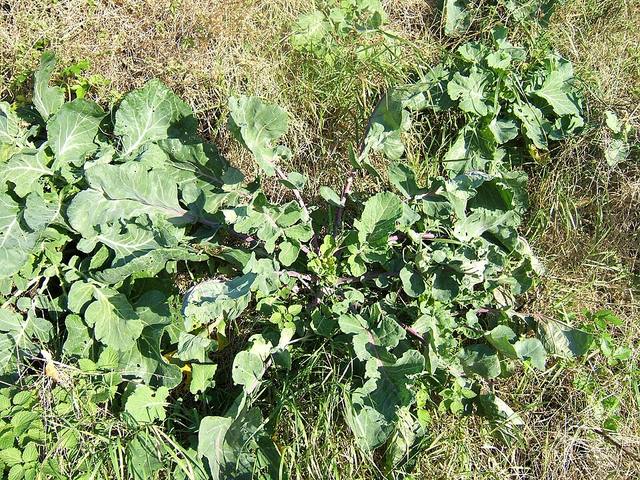
Photo: MPF · CC BY 2.5 · Wikimedia Commons

Cabbage, kale and broccoli
Brassica oleracea
Also called Wild cabbage, Cauliflower, Brussels sprouts, Collards
Vegetable · Family Brassicaceae · Native to Coasts of western and southern Europe
One species that growers have shaped into cabbage, kale, broccoli, cauliflower and more. It is a cool-season crop that is easy to raise but troubled by caterpillars and clubroot.
Not on the ASPCA's list: keep it out of reach of pets.
Care
Light
Full sun
Plant in full sun, at least 6 hours a day. Leaves that are pale and stretched mean too much shade.
Water
About every 5 days in the growing season, every 10 in the cool season
Give a good soak every few days in dry weather. Dry spells make heads split, loose or bitter. Water the soil, not the leaves. In the cool season it needs half as much.
Water when the top 3 cm (1 in) of soil is dry
Humidity
Medium humidity
Outdoor air is fine. It grows best in moist, cool weather.
Temperature
10 to 22 °C (50 to 72 °F)
Best at 10 to 22 °C (50 to 72 °F). Kale takes -10 °C (14 °F); cabbage and cauliflower are damaged below about -5 °C (23 °F). Over 25 °C (77 °F) it bolts.
Soil
Firm, fertile soil rich in compost, pH 6.5 to 7.5. Add lime if the soil is acidic: it helps prevent clubroot. Firm the soil well around the roots.
Feeding
Every 3 weeks in the growing season
Feed every 3 weeks with a nitrogen-rich feed once plants are growing well. Hungry crop: it likes rich soil.
Repotting
Sow in spring or summer and plant out at 4 to 6 weeks. Grown as an annual or biennial. Do not grow it in the same bed two years in a row.
Pruning
Pick off yellow lower leaves. Cut kale leaves from the bottom up and it keeps producing. After harvest, pull the stalk and bin it if it has clubroot.
Propagation
Sow seed 1 cm (0.5 in) deep indoors in trays, or direct, and plant seedlings out at 4 to 6 weeks, with the lowest leaves at soil level.
Size
30 to 120 cm (12 to 47 in)
Medium growth
Outdoors
USDA zones 3 to 10
Grown as a cool-season crop in the open in sun, 45 to 60 cm (18 to 24 in) apart. Net it against pigeons and butterflies. Rotate beds every 3 to 4 years.
Eating
Leaves, buds, stems and flower heads depending on the type (cabbage, kale, broccoli, cauliflower)
Common problems
Holes in the leaves, green caterpillars
Cabbage white butterfly caterpillars
Pick them off by hand and cover the crop with fine mesh from planting.
Stunted plants, swollen and distorted roots
Clubroot, a soil disease
Lift and bin the plants, do not compost them. Lime the soil and rotate: do not grow brassicas there for 7 years.
Loose heads that split
Uneven watering or too much feeding late
Water evenly, and stop feeding as the head forms.
Plants bolt and flower early
Heat or a cold snap while young
Sow later or choose a bolt-resistant type. Harvest at once and use it.
Grey, sticky clusters under leaves
Aphids
Wash off with a jet of water or squash them. Check each week.
Did you know?
Cabbage, kale, broccoli, cauliflower, Brussels sprouts and kohlrabi are all the same species, bred for different parts of the plant over thousands of years.
General care information for a typical plant. Conditions in your home or garden may need a different rhythm.
Not sure what your plant is?
Identify a plant from a photoSee this guide in the appKagn Plants also keeps your own plants with watering reminders, and its plant doctor reads what is wrong with one.
Updated 22 November 2026.