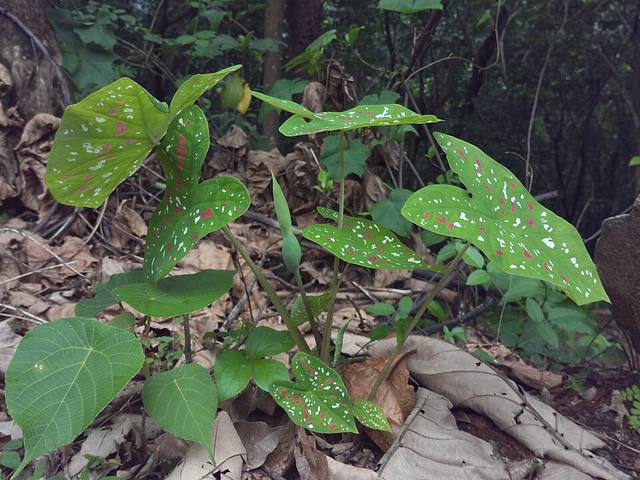
Photo: Nativeplants garden · CC BY-SA 4.0 · Wikimedia Commons

Caladium
Caladium bicolor
Also called Angel wings, Elephant ears, Heart of Jesus
Houseplant · Family Araceae · Native to Tropical South America
A tuber plant with thin, heart-shaped leaves in pink, red, white and green. It gives a summer show of colour, then rests in winter.
Toxic to cats and dogs
Toxic principle: Insoluble calcium oxalates
Signs: Oral irritation, pain and swelling of mouth, tongue and lips, excessive drooling, vomiting, difficulty swallowing
Care
Light
Bright, indirect light
Bright, filtered light, with no direct midday sun. The colour fades in low light and the leaves scorch in strong sun. Some forms tolerate more sun.
Water
About every 5 days in the growing season, every 21 in the cool season
Water well in the growing season. When the leaves die down in autumn, stop watering and keep the tubers dry until spring. Wet cold soil rots the tubers.
Keep evenly moist; water when the top 1 cm (0.5 in) of soil is dry
Humidity
High humidity
It likes humid, warm air. Dry air browns the leaf edges.
Temperature
21 to 30 °C (70 to 86 °F)
Grows at 21 to 30 °C (70 to 86 °F). It is damaged below about 15 °C (59 °F). Tubers store dry at 15 to 18 °C (59 to 64 °F).
Soil
A rich, loose, well-draining mix with perlite and peat. Plant tubers 3 to 5 cm (1 to 2 in) deep, knobbly side up, in a pot with drainage holes.
Feeding
Every 3 weeks in the growing season
Feed every 3 weeks once leaves are growing, with a half-strength feed. Stop when leaves yellow in autumn.
Repotting
Every 1 year
Repot the tubers each spring into fresh mix, once they show signs of growth. Divide any offsets from the main tuber.
Pruning
Cut off dead or yellow leaves at the base. Cut off any flower spikes early, as they take energy from the leaves. Wear gloves: sap irritates.
Propagation
Divide the tuber in spring into pieces each with at least one bud, dry the cut for a day and plant. They sprout in 2 to 4 weeks in warmth.
Size
25 to 60 cm (10 to 24 in)
Fast growing
Outdoors
USDA zones 9 to 11
Grows outdoors in part shade in frost-free climates, or as a summer bedding plant. Elsewhere lift the tubers in autumn and store them dry.
Common problems
Leaves yellow and die in autumn
Natural dormancy
Stop watering, let the tubers rest dry and warm, and replant in spring.
Tubers do not sprout
Too cold or too wet
Keep them at least 21 °C (70 °F) and just moist until shoots show.
Brown, crisp leaf edges
Dry air or sun
Raise humidity and move out of direct sun.
Rotten, soft tuber
Cold, wet soil
Cut away rot, dry the tuber and replant in fresh, drier mix, or discard.
Faded colours
Too little light
Give brighter light, with no direct midday sun.
Did you know?
Every leaf is thin enough to glow when light shines through. Growers have raised hundreds of named forms, and the tubers are lifted and traded each spring.
General care information for a typical plant. Conditions in your home or garden may need a different rhythm.
Not sure what your plant is?
Identify a plant from a photoSee this guide in the appKagn Plants also keeps your own plants with watering reminders, and its plant doctor reads what is wrong with one.
Updated 22 November 2026.