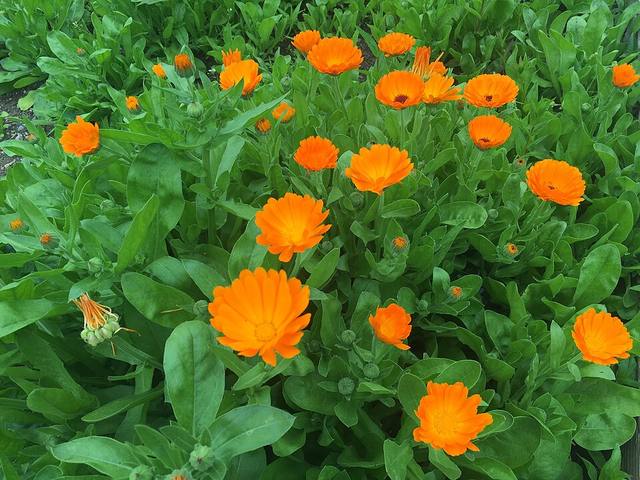
Photo: Betty Cai · CC BY-SA 4.0 · Wikimedia Commons

Pot marigold
Calendula officinalis
Also called Calendula, English marigold, Garden marigold
Herb · Family Asteraceae · Native to Southern Europe (Mediterranean)
A cheerful, easy annual with bright orange or yellow daisy flowers, grown for the garden and for its edible petals. It flowers for months and self-seeds.
The ASPCA lists this plant as non-toxic to cats and dogs
Care
Light
Full sun
Likes full sun but copes with light shade. Flowers close in dull weather and at night, which is normal. Shaded plants are leggy with fewer flowers.
Water
About every 7 days
Water in dry weather; it is fairly drought tolerant once settled. It is an annual, so winter_days is the same as summer_days; in mild climates it grows through winter. Wet soil rots the base.
Water when the top 2 cm (1 in) of soil is dry
Humidity
Low humidity
Outdoor air is fine. Space plants so leaves dry quickly and mildew stays away.
Temperature
10 to 25 °C (50 to 77 °F)
Half-hardy: light frost to about -5 °C (23 °F) can be tolerated. Grows best at 10 to 25 °C (50 to 77 °F), and flowers slow in very hot summers.
Soil
Average, well-drained soil, pH 6 to 7. It copes with poor soil.
Feeding
Every 6 weeks in the growing season
Feed every 6 weeks with a balanced fertiliser only if growing in a pot. In the ground, rich soil gives leaves, not flowers.
Repotting
Not repotted: sow seed each year. It self-seeds, so scatter a few spent heads to get plants next year.
Pruning
Deadhead spent flowers often to keep flowers coming. Pinch young plants to make them bushy.
Propagation
Sow seed 1 cm (1/2 in) deep in spring or autumn, or direct in the bed. Plants flower about 8 weeks after sowing.
Size
30 to 60 cm (12 to 24 in)
Fast growing
Outdoors
USDA zones 2 to 11
Annual in a sunny bed or pot, 20 to 30 cm (8 to 12 in) apart. Sow in spring, or autumn in mild areas for early flowers.
Eating
Flower petals
Use the petals only. Do not confuse it with French or African marigolds (Tagetes), which are a different plant.
Common problems
White powder on leaves
Powdery mildew
Water at the base, thin crowded plants and remove affected leaves.
Few flowers, leggy plants
Too much shade or rich soil
Give more sun, avoid heavy feeding and deadhead.
Black or green aphids
Aphids
Wash off with water; ladybirds help.
Flowers closed in the day
Dull weather or evening
Normal; they reopen in bright light.
Rotting base, collapse
Wet soil
Plant on well-drained soil and water less.
Did you know?
Calendula was known to the Romans as 'calends' because it flowered in nearly every month. The petals have been used as a cheap saffron substitute.
General care information for a typical plant. Conditions in your home or garden may need a different rhythm.
Not sure what your plant is?
Identify a plant from a photoSee this guide in the appKagn Plants also keeps your own plants with watering reminders, and its plant doctor reads what is wrong with one.
Updated 22 November 2026.