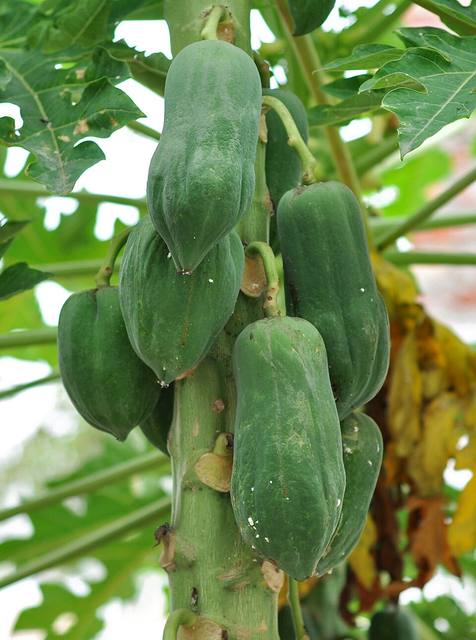
Photo: Joydeep · CC BY-SA 3.0 · Wikimedia Commons

Papaya
Carica papaya
Also called Pawpaw, Papaw
Tree · Family Caricaceae · Native to Southern Mexico and Central America
A fast, palm-like tropical tree with a single trunk and a crown of large, deeply cut leaves. It fruits within a year of planting and is grown for its sweet orange fruit.
Not on the ASPCA's list: keep it out of reach of pets.
Care
Light
Full sun
Needs full sun, at least 6 hours. In shade it grows tall and weak and does not fruit. Young plants are sheltered from the strongest sun.
Water
About every 4 days in the growing season, every 10 in the cool season
Water well in the growing season, because it grows fast and drinks a lot, but never in standing water. Wet roots quickly rot it. Water less in cool weather.
Water when the top 3 cm (1 in) of soil is dry
Humidity
Medium humidity
Normal humidity is fine.
Temperature
22 to 32 °C (72 to 90 °F)
Grows best at 22 to 32 °C (72 to 90 °F). Growth stops below 15 °C (59 °F) and cold near 5 °C (41 °F) damages it. Frost kills it.
Soil
A rich, very well-drained soil with plenty of compost. Slightly acid to neutral. Plant on a mound in wet places.
Feeding
Every 4 weeks in the growing season
Feed every 4 weeks in the growing season with a balanced feed, plus compost. It is a hungry plant.
Repotting
Not repotted in the ground. Move a pot plant to a bigger pot each spring. It dislikes root disturbance.
Pruning
None needed, except removing dead leaves. Remove extra male plants if you only want fruit and have a hermaphrodite plant.
Propagation
Sow fresh seed from a ripe fruit in warm, moist mix. It germinates in 2 to 3 weeks. Plant out when 30 cm (1 ft) tall. Plants fruit in 9 to 12 months.
Size
200 to 500 cm (79 to 197 in)
Fast growing
Outdoors
USDA zones 10 to 12
Grows outdoors in frost-free climates in full sun and rich, sheltered ground. Plants are short-lived and are renewed every 3 to 4 years.
Eating
Ripe fruit flesh
The milky sap of green fruit and stems can irritate skin and mouth. Eat fruit only when ripe.
Common problems
Yellow lower leaves
Wet roots or hunger
Check the drainage, water less and feed in the growing season.
Flowers but no fruit
Male plant or cool weather
A male plant bears no fruit. Grow 3 plants together and keep the hermaphrodite or female ones.
Collapse, soft base
Root rot
Plant on a mound and avoid wet ground. A rotted plant cannot be saved.
White powder on leaves
Powdery mildew
Improve air flow and remove infected leaves.
Leaves curl and stunt
Aphids or virus
Wash off aphids. Remove plants with ring spots on the leaves.
Did you know?
Papaya plants can be male, female or both. A seedling can flower in under a year, and the fruit can weigh several kilograms.
General care information for a typical plant. Conditions in your home or garden may need a different rhythm.
Not sure what your plant is?
Identify a plant from a photoSee this guide in the appKagn Plants also keeps your own plants with watering reminders, and its plant doctor reads what is wrong with one.
Updated 22 November 2026.