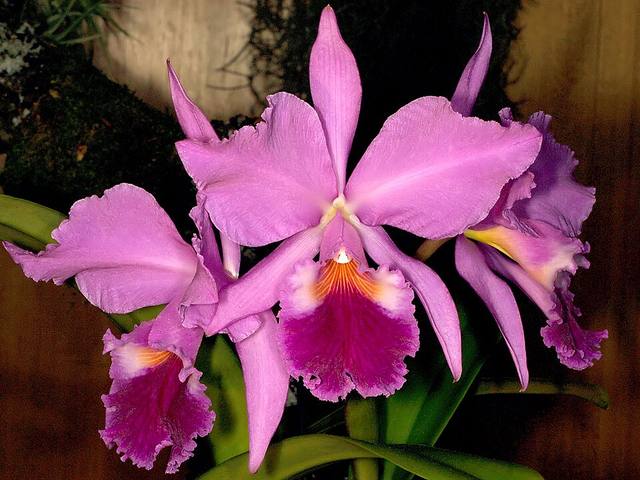
Photo: Orchi · CC BY-SA 3.0 · Wikimedia Commons

Cattleya orchid
Cattleya
Also called Corsage orchid, Cattleya, Queen of orchids
Houseplant · Family Orchidaceae · Native to Central and South America (Mexico to Argentina)
An orchid known for very large, fragrant, frilled flowers in pink, purple, white and yellow. It is grown for cut flowers and as a long-lived houseplant.
Not on the ASPCA's list: keep it out of reach of pets.
Care
Light
Bright, indirect light
Bright light with gentle morning sun. Leaves should be light olive-green. Dark green leaves and no flowers mean too little light, and yellow or scorched leaves mean too much.
Water
About every 7 days in the growing season, every 12 in the cool season
Water thoroughly, let it drain fully, and wait until it is nearly dry before watering again. The fleshy pseudobulbs store water, so too much water is worse than too little. Water less in winter.
Water when the bark mix is dry and the pseudobulbs look firm
Humidity
Medium humidity
Wants 50 to 70 percent humidity with good air movement. Stale, wet air invites rot.
Temperature
15 to 29 °C (59 to 84 °F)
Grows best at 15 to 29 °C (59 to 84 °F). A cooler night helps it flower. Damage starts below 10 °C (50 °F).
Soil
A coarse, open orchid bark mix, never normal compost. Use a pot with plenty of drainage and air around the roots.
Feeding
Every 2 weeks in the growing season
Feed every 2 weeks in the growing season with an orchid feed at quarter strength. Feed once a month in winter. Flush the pot with plain water monthly.
Repotting
Every 2 years
Repot every 2 years when new growth starts and new roots appear, or when the bark breaks down.
Pruning
Cut off the flower stem when it has faded. Remove dead sheaths and leaves.
Propagation
Divide a clump in spring into pieces with at least 3 pseudobulbs each. Pot in fresh bark and keep it barely damp until new roots grow.
Size
20 to 60 cm (8 to 24 in)
Slow growing
Outdoors
USDA zones 10 to 12
Grows outdoors in frost-free gardens, mounted on a tree or in a basket in bright light with good air.
Common problems
Wrinkled pseudobulbs
Underwatering or rotted roots
Soak the pot well. If roots are mushy, cut them away and repot in fresh bark.
Healthy plant but no flowers
Too little light
Give brighter light and a cooler night in autumn.
Black sheath with no buds
Bud sheath dried out
Keep humidity higher and avoid hot, dry air near the sheath.
Black spots on leaves
Fungus from stale, wet air
Improve airflow, water in the morning and remove badly spotted leaves.
Soft, mushy leaf bases
Overwatering
Let the mix dry well between waterings.
Did you know?
The genus was named for William Cattley, a collector who grew the first plant after it arrived in 1818 as packing material for other plants.
General care information for a typical plant. Conditions in your home or garden may need a different rhythm.
Not sure what your plant is?
Identify a plant from a photoSee this guide in the appKagn Plants also keeps your own plants with watering reminders, and its plant doctor reads what is wrong with one.
Updated 22 November 2026.