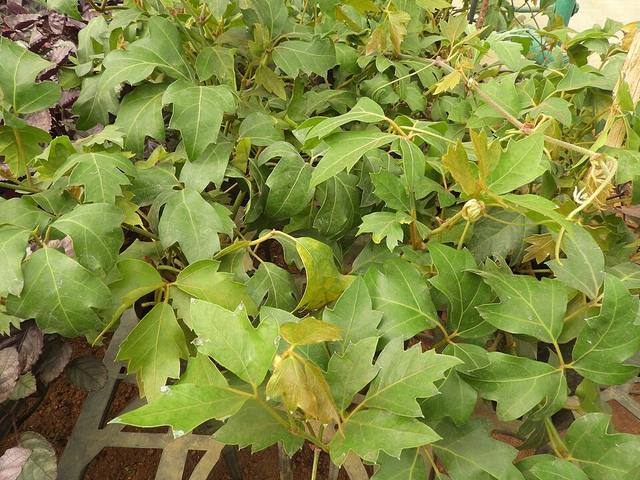
Photo: Yercaud-elango · CC BY-SA 4.0 · Wikimedia Commons

Grape ivy
Cissus rhombifolia
Also called Venezuela treebine, Oakleaf ivy
Houseplant · Family Vitaceae · Native to Tropical Central and South America
A tough climbing vine with glossy, diamond-shaped leaflets in threes, grown on a trellis or in a hanging pot. It copes with shade and neglect better than most houseplants.
The ASPCA lists this plant as non-toxic to cats and dogs
Care
Light
Medium light
It tolerates low light but grows best in medium to bright light without direct sun. In deep shade it gets leggy, and in hot sun the leaves scorch.
Water
About every 8 days in the growing season, every 16 in the cool season
Water well, then let the top dry a little. It forgives short dry spells but not soggy soil. Water about every 2 weeks in winter.
Water when the top 3 cm (1 in) of soil is dry
Humidity
Medium humidity
Normal home air is fine. Very dry air gives brown leaf tips.
Temperature
15 to 26 °C (59 to 79 °F)
Grows best at 15 to 26 °C (59 to 79 °F). Cold below 10 °C (50 °F) damages the leaves.
Soil
An ordinary, free-draining potting mix. It does not need anything special.
Feeding
Every 4 weeks in the growing season
Feed every 4 weeks in spring and summer with a balanced liquid feed. Stop in winter.
Repotting
Every 2 years
Repot every 2 years in spring into a pot one size up.
Pruning
Pinch or cut back shoots to keep it full. It can be cut hard in spring and grows back. Cut just above a leaf.
Propagation
Stem cuttings with 2 to 3 leaves root easily in water or moist compost in 3 to 4 weeks.
Size
100 to 300 cm (39 to 118 in)
Fast growing
Outdoors
USDA zones 10 to 11
Grows outdoors only in frost-free areas, climbing walls and fences in part shade. Elsewhere it is a houseplant.
Common problems
Brown, crisp leaf edges
Dry air or too little water
Water more regularly and move it away from heaters.
Leaves yellow and drop
Overwatering or a cold draught
Let the top dry before watering and keep it away from cold windows.
White powder on leaves
Powdery mildew
Improve airflow, remove badly affected leaves and avoid wetting the foliage.
Long, bare stems
Too little light
Move it brighter and cut back to promote new shoots.
Sticky leaves and tiny insects
Aphids or mealybugs
Wash with soapy water and repeat weekly.
Did you know?
Despite the name it is not an ivy but a relative of grape vines, and it climbs with curling tendrils like a grape does.
General care information for a typical plant. Conditions in your home or garden may need a different rhythm.
Not sure what your plant is?
Identify a plant from a photoSee this guide in the appKagn Plants also keeps your own plants with watering reminders, and its plant doctor reads what is wrong with one.
Updated 22 November 2026.