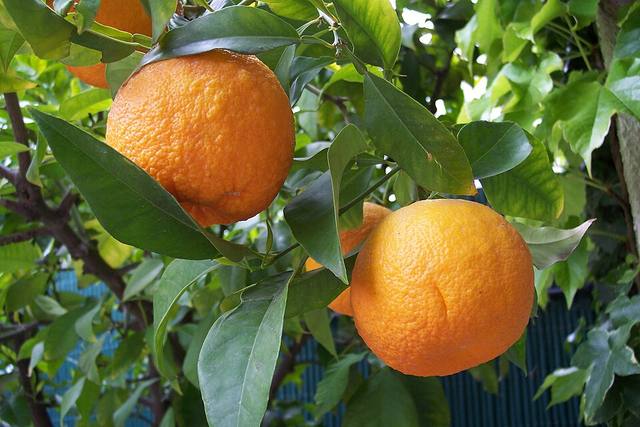
Photo: A. Barra · CC BY-SA 4.0 · Wikimedia Commons

Sweet orange
Citrus aurantium
Also called Orange, Navel orange, Valencia orange
Tree · Family Rutaceae · Native to Southern China (a hybrid, long cultivated)
A small, evergreen citrus tree with glossy leaves, scented white flowers and the familiar sweet orange fruit. It grows in the ground or a large pot in warm climates.
Toxic to cats and dogs
Toxic principle: Essential oils and psoralens
Signs: Vomiting, diarrhea, depression; potential dermatitis. Fruit is edible, skins and plant material can cause problems.
Care
Light
Full sun
Full sun, 6 or more hours a day. In dim light it drops leaves and does not fruit. Indoors it needs the brightest window, and does best outside in summer.
Water
About every 7 days in the growing season, every 14 in the cool season
Water deeply, then let the top dry. It dislikes both drought and wet roots. Leaf drop can mean either. Water in the morning. Water less in winter.
Water when the top 5 cm (2 in) of soil is dry
Humidity
Medium humidity
Normal room humidity is fine. Dry indoor winter air can drop leaves, so mist or group it with other plants.
Temperature
13 to 32 °C (55 to 90 °F)
Best at 13 to 32 °C (55 to 90 °F). Frost damages it: leaves and fruit suffer below about -2 °C (28 °F).
Soil
Rich, free-draining, slightly acidic soil, pH 6 to 7. Use citrus compost in a pot with drainage holes.
Feeding
Every 4 weeks in the growing season
Feed every 4 weeks in spring and summer with a citrus fertiliser containing nitrogen and iron. Pause in winter.
Repotting
Every 3 years
Repot every 3 years in spring into a pot one size up. In the ground, nothing to do.
Pruning
Prune lightly after fruiting to shape and remove dead wood. Do not cut hard.
Propagation
Citrus trees are usually grafted. Seed gives variable trees that take 7 years or more to fruit. Buying a grafted tree is the surest route.
Size
200 to 600 cm (79 to 236 in)
Medium growth
Outdoors
USDA zones 9 to 11
Grows outdoors in frost-free or mild climates in full sun and shelter. Space 4 to 6 m (13 to 20 ft). In cooler areas use a pot and bring it in for winter.
Eating
Fruit pulp and juice
Leaves, peel and seeds are not for eating; ASPCA lists the plant as toxic to pets.
Common problems
Yellow leaves with green veins
Iron or nutrient shortage, or cold roots
Use citrus fertiliser; check the soil is not waterlogged.
Leaves drop suddenly
Overwatering, drought or cold draught
Keep soil evenly just moist and avoid draughts.
Curled leaves with sticky residue
Aphids or scale
Wash with a jet of water; wipe off scale.
Flowers drop, no fruit
Cold, dry air or stress
Keep steady conditions; hand-pollinate indoors.
Fruit drops while small
Natural thinning, or stress
Normal in part; keep watering even.
Did you know?
It is a hybrid of mandarin and pomelo that has been grown for so long that it arose in cultivation, not in the wild.
General care information for a typical plant. Conditions in your home or garden may need a different rhythm.
Not sure what your plant is?
Identify a plant from a photoSee this guide in the appKagn Plants also keeps your own plants with watering reminders, and its plant doctor reads what is wrong with one.
Updated 22 November 2026.