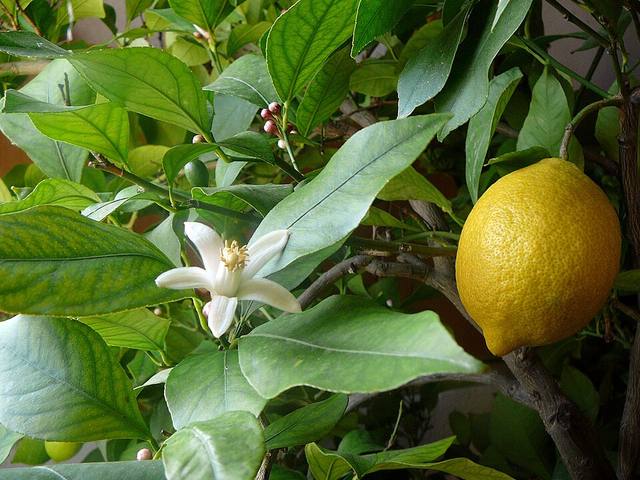
Photo: Elena Chochkova · CC BY-SA 4.0 · Wikimedia Commons

Lemon
Citrus limon
Also called Meyer lemon (Citrus x meyeri), Lemon tree
Tree · Family Rutaceae · Native to Southeast Asia (cultivated origin)
A small, glossy evergreen tree with fragrant white flowers and yellow fruit. Grown outdoors in mild climates, and in pots that spend winter indoors elsewhere.
Toxic to cats and dogs
Toxic principle: Essential oils and psoralens
Signs: Vomiting, diarrhea, depression; potential dermatitis. Fruit is edible, skins and plant material can cause problems.
Care
Light
Full sun
Give it the sunniest spot you have, at least 6 hours of direct sun. Too little light means pale leaves, few flowers and no fruit. Move potted trees outside after the last frost.
Water
About every 5 days in the growing season, every 12 in the cool season
Water deeply until it drains, then let the top dry. Never let the pot stand in water. Wet roots cause yellow leaves and leaf drop. Water far less in winter, when growth slows.
Water when the top 3 to 5 cm (1 to 2 in) of soil is dry
Humidity
Medium humidity
Normal home air is fine. Dry, heated rooms in winter bring leaf drop and spider mites, so keep it cool and bright.
Temperature
13 to 29 °C (55 to 84 °F)
Grows best at 13 to 29 °C (55 to 84 °F). Leaves and fruit are damaged near 0 °C (32 °F), so bring pots in before frost.
Soil
A loose, fast-draining mix, such as a citrus or cactus compost with extra grit. Slightly acid to neutral. The pot must have drainage holes.
Feeding
Every 2 weeks in the growing season
Feed every 2 weeks from spring to early autumn with a citrus fertiliser that contains iron and magnesium. Feed once a month, or not at all, in winter.
Repotting
Every 3 years
Repot every 2 to 3 years in spring, only one size up. A snug pot flowers better than a huge one.
Pruning
Remove dead wood and crossing branches after harvest or in late winter. Cut back long shoots by a third to keep a compact shape. Wear gloves, because many types have thorns.
Propagation
Hardwood cuttings are possible but slow. Most people buy a grafted tree, because lemons grown from pips take years to fruit and vary a lot.
Size
100 to 300 cm (39 to 118 in)
Medium growth
Outdoors
USDA zones 9 to 11
Grow it outdoors in full sun with shelter from cold wind. Space trees 3 to 5 m (10 to 16 ft) apart. In cold climates use a pot and bring it in.
Eating
Fruit juice and zest
Pips and peel are bitter. ASPCA lists the plant as toxic to pets, so keep leaves and peel away from cats and dogs.
Common problems
Yellow leaves with green veins
Missing iron or magnesium, or wet roots
Feed with a citrus fertiliser and check the pot drains. Water less if the soil stays wet.
Leaves and flower buds drop
Cold draught, dry air or a sudden move
Keep it in a steady bright spot away from vents and doors. Avoid moving it often.
Flowers but no fruit
Too little light or no pollination
Give it full sun. Outside, bees pollinate. Indoors, dab flowers with a soft brush.
Sticky leaves, white or brown specks
Scale insects or spider mites
Wipe leaves with soapy water and repeat weekly. Raise humidity for mites.
Curled, shrivelled new growth
Aphids
Spray them off with water, then wipe shoots with soapy water.
Did you know?
Lemon trees flower and fruit on and off through the year in warm climates, so one tree can carry flowers, green fruit and ripe fruit at once.
General care information for a typical plant. Conditions in your home or garden may need a different rhythm.
Not sure what your plant is?
Identify a plant from a photoSee this guide in the appKagn Plants also keeps your own plants with watering reminders, and its plant doctor reads what is wrong with one.
Updated 22 November 2026.