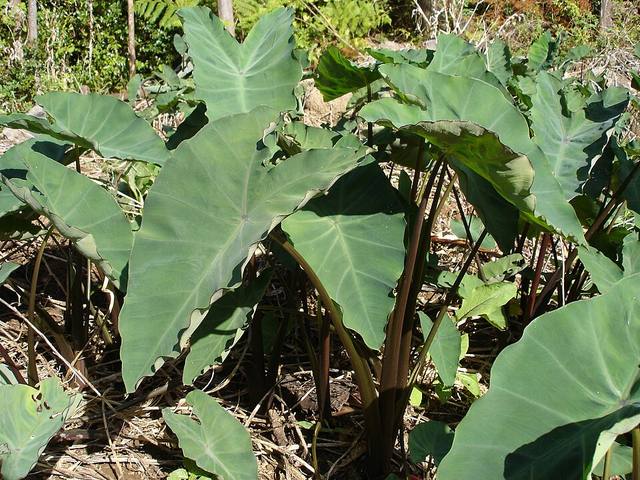
Photo: Thierry Caro (assumed by Wikimedia Commons) · CC BY-SA 2.5 · Wikimedia Commons

Taro
Colocasia esculenta
Also called Elephant ear, Dasheen, Eddoe, Cocoyam
Houseplant · Family Araceae · Native to Tropical Asia
A lush plant with huge, heart-shaped leaves held on tall stalks. It is grown for its looks in pots and ponds, and its corms are a food crop in the tropics.
Toxic to cats and dogs
Toxic principle: Insoluble calcium oxalates
Signs: Oral irritation, intense burning and irritation of mouth, tongue and lips, excessive drooling, vomiting, difficulty swallowing
Care
Light
Bright, indirect light
Bright light with some direct sun, and part shade in hot places. Too little light makes it floppy. Hot afternoon sun can scorch the leaf edges.
Water
About every 4 days in the growing season, every 12 in the cool season
It loves water and can even stand in a shallow saucer in summer. In autumn it rests: cut watering right back, and the leaves may die down.
Keep the soil moist; water when the top 2 cm (1 in) is dry
Humidity
Medium humidity
Average humidity is fine, though it grows lusher in humid air.
Temperature
18 to 30 °C (64 to 86 °F)
Keep it at 18 to 30 °C (64 to 86 °F). The leaves die back below about 10 °C (50 °F), and the corm is damaged below about 5 °C (41 °F).
Soil
A rich, moisture-holding potting mix with compost. A heavy pot with drainage holes, or a wet bed or pond edge, works well. It likes a slightly acidic soil.
Feeding
Every 3 weeks in the growing season
Feed every 3 weeks in the growing season with a balanced fertiliser, since it grows fast. Do not feed when it rests.
Repotting
Every 1 year
Repot or divide every year in spring, because the corms multiply quickly. Use a pot one size up.
Pruning
Cut off old and brown leaves at the base. Wear gloves, as the sap can irritate skin.
Propagation
Divide the corms or the offsets in spring. Each piece with a bud and a few roots will grow if planted in moist, rich soil.
Size
90 to 200 cm (35 to 79 in)
Fast growing
Outdoors
USDA zones 8 to 11
Grows outdoors in sun or part shade in moist or boggy soil, 60 to 90 cm (2 to 3 ft) apart. In cold areas lift the corms in autumn and store them dry.
Eating
Cooked corms and leaves, a staple food in the tropics
Raw corms, leaves and stalks contain calcium oxalate crystals that burn the mouth and throat. Only eat after thorough cooking, and never feed raw plant to pets.
Common problems
Brown, crispy leaf edges
Dry soil or hot sun
Water more often and give afternoon shade.
Yellow leaves in autumn
Natural resting period
Cut down on water and let it die back. Keep the corm dry and frost-free.
Floppy, drooping leaves
Thirst or too little light
Water thoroughly and move to brighter light.
Sticky leaves, fine webbing
Spider mites or aphids
Rinse leaves, wipe undersides and repeat weekly.
Soft, rotten corm
Cold, wet soil in winter
Lift the corm, cut off rot and store it dry until spring.
Did you know?
Taro is one of the oldest crops in the world, grown for thousands of years in Asia and the Pacific. Poi is made from its cooked, mashed corms.
General care information for a typical plant. Conditions in your home or garden may need a different rhythm.
Not sure what your plant is?
Identify a plant from a photoSee this guide in the appKagn Plants also keeps your own plants with watering reminders, and its plant doctor reads what is wrong with one.
Updated 22 November 2026.