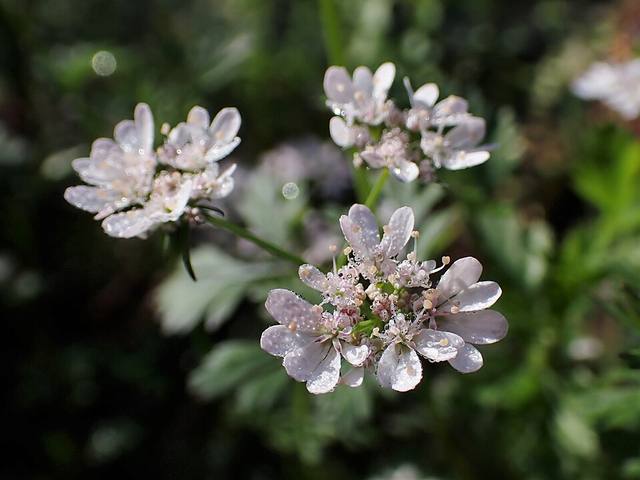
Photo: Krzysztof Ziarnek, Kenraiz · CC BY-SA 4.0 · Wikimedia Commons

Coriander
Coriandrum sativum
Also called Cilantro, Chinese parsley, Dhania
Herb · Family Apiaceae · Native to Southern Europe to southwestern Asia
A quick annual herb grown for its leaves (called cilantro in North America) and for its round seeds. It bolts quickly in heat, so it needs regular resowing.
The ASPCA lists this plant as non-toxic to cats and dogs
Care
Light
Part sun
Full sun in cool weather, part shade in summer heat. Shade slows bolting and keeps leaves lush.
Water
About every 3 days
Keep the soil evenly moist; dry spells make it bolt. Do not overwater, as roots rot. Sown in spring and autumn, so the winter figure equals summer.
Water when the top 2 cm (1 in) of soil is dry
Humidity
Medium humidity
Normal humidity. Hot, dry weather makes it bolt.
Temperature
10 to 25 °C (50 to 77 °F)
Best at 10 to 25 °C (50 to 77 °F). It survives a light frost to about -5 °C (23 °F), and bolts above about 27 °C (81 °F).
Soil
Light, fertile, well-drained soil, pH 6 to 7. Use a deep pot of 20 cm (8 in), because the taproot hates being moved.
Feeding
Every 4 weeks in the growing season
Feed lightly with a general fertiliser every 4 weeks. Too much nitrogen reduces the flavour.
Repotting
Annual: sow every 3 weeks in cool weather. It resents transplanting, so sow where it will grow.
Pruning
Cut outer leaves often, leaving the centre. Let a few plants flower and set seed if you want coriander seed.
Propagation
Sow seed 1 cm (0.5 in) deep and 15 cm (6 in) apart. Crush the husk lightly before sowing; it sprouts in 7 to 14 days.
Size
30 to 70 cm (12 to 28 in)
Fast growing
Outdoors
USDA zones 2 to 11
Grown as a cool-season annual in a sunny bed or pot, in spring and autumn. In hot places use shade.
Eating
Leaves, stems, roots and seeds
Common problems
Goes to flower quickly
Bolting from heat or stress
Sow in cool weather, give afternoon shade and sow every 3 weeks.
Leaves become feathery and bitter
Bolting
Pull and resow, or save the seeds.
Yellow leaves
Overwatering or poor drainage
Let the top dry slightly between waterings.
White powder
Powdery mildew
Improve airflow and water the soil.
Seeds do not sprout
Old seed or hot soil
Use fresh seed and sow in cool weather.
Did you know?
Some people taste coriander leaves as soap. A common variation in smell-receptor genes, which detect aldehyde chemicals in the leaves, is linked to this.
General care information for a typical plant. Conditions in your home or garden may need a different rhythm.
Not sure what your plant is?
Identify a plant from a photoSee this guide in the appKagn Plants also keeps your own plants with watering reminders, and its plant doctor reads what is wrong with one.
Updated 22 November 2026.