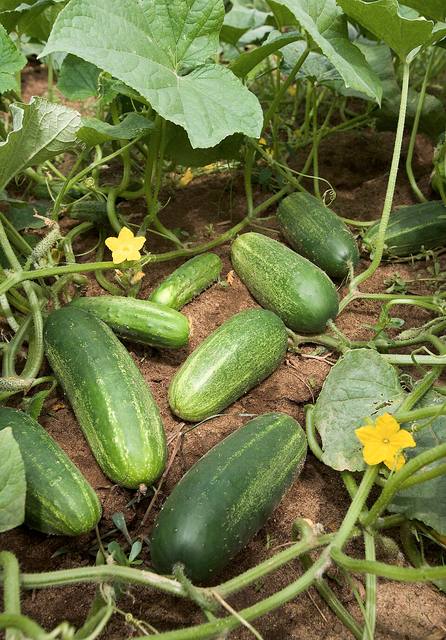
Photo: Stephen Ausmus, USDA ARS · Public domain · Wikimedia Commons

Cucumber
Cucumis sativus
Also called Garden cucumber
Vegetable · Family Cucurbitaceae · Native to Southern Asia (India and the Himalayan foothills)
A fast-growing, climbing or trailing summer vegetable that gives crisp fruit within 2 to 3 months of sowing. It needs warmth, steady water and something to climb.
The ASPCA lists this plant as non-toxic to cats and dogs
Care
Light
Full sun
Full sun, at least 6 hours, in a sheltered spot. In shade it flowers little. Shade also invites powdery mildew.
Water
About every 2 days
Water deeply and steadily at the roots, not on the leaves. Fruit is mostly water, so dry spells make bitter, misshapen fruit. A summer crop that dies in frost: the winter figure is the same as summer.
Water when the top 2 cm (1 in) is dry; in hot weather, daily
Humidity
Medium humidity
Humid, warm air suits it. Powdery mildew is likely in humid, still air, so give good airflow.
Temperature
18 to 30 °C (64 to 86 °F)
Best at 18 to 30 °C (64 to 86 °F). It is damaged by frost and stalls below about 10 °C (50 °F).
Soil
Rich, moist, well-drained soil with plenty of compost; pH 6 to 7. In pots use at least 20 litres.
Feeding
Every 2 weeks in the growing season
Feed with a high-potash fertiliser every 2 weeks once fruit sets. Water in well.
Repotting
Annual: sow each spring. Seedlings are moved to the final spot once, with minimal root disturbance.
Pruning
Tie vines up a trellis. Pinch the tip at the top of the support; remove yellow lower leaves.
Propagation
Sow seed 1 cm (0.5 in) deep after frost, or indoors in small pots 3 to 4 weeks before. Seeds sprout in 3 to 10 days at 20 °C (68 °F) or more.
Size
100 to 250 cm (39 to 98 in)
Fast growing
Outdoors
USDA zones 4 to 11
Grown as a summer annual almost anywhere, on a trellis or sprawling, 30 to 45 cm (12 to 18 in) apart.
Eating
Fruit, eaten fresh or pickled
Common problems
White powder on leaves
Powdery mildew
Improve airflow, water the soil not the leaves, remove badly affected leaves.
Bitter fruit
Heat or irregular watering
Water evenly and shade from the hottest sun.
Flowers but no fruit
Few pollinators
Hand-pollinate: touch a male flower to a female flower that has a tiny fruit behind it.
Yellow leaves and wilting vines
Wilt, bacteria or overwatering
Remove affected plants; improve drainage and rotate crops.
Small, curved fruit
Poor pollination or stress
Keep watering steady and feed regularly.
Did you know?
A cucumber is about 95 % water. Its tendril coils around a support, and partway along the coil reverses direction, forming a spring that takes up the strain.
General care information for a typical plant. Conditions in your home or garden may need a different rhythm.
Not sure what your plant is?
Identify a plant from a photoSee this guide in the appKagn Plants also keeps your own plants with watering reminders, and its plant doctor reads what is wrong with one.
Updated 22 November 2026.