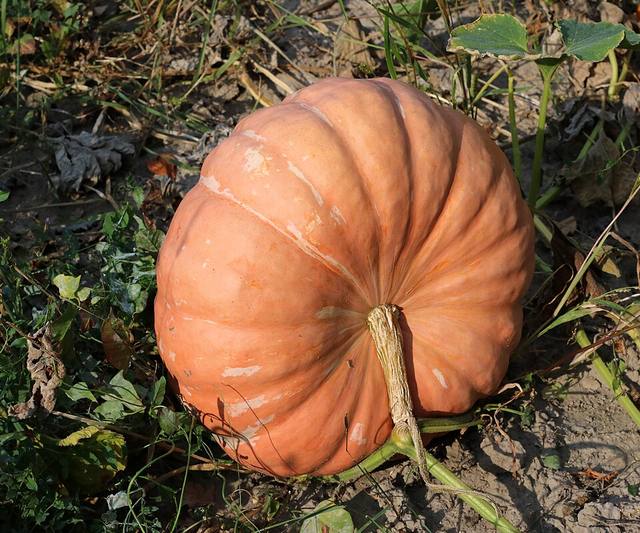
Photo: George Chernilevsky · Public domain · Wikimedia Commons

Winter squash
Cucurbita maxima
Also called Pumpkin, Hubbard squash, Buttercup squash, Giant pumpkin, Turban squash
Vegetable · Family Cucurbitaceae · Native to South America (Argentina)
A big, trailing, frost-tender vine that makes large winter squash and some pumpkins, stored for months. It needs space, sun and a long, warm season.
The ASPCA lists this plant as non-toxic to cats and dogs
Care
Light
Full sun
Needs full sun and shelter. In shade it makes leaves and few fruit. Large leaves wilt in midday heat but recover at night if the soil is moist.
Water
About every 4 days
Water deeply at the base, about once or twice a week, more in heat and when fruit swell. Do not wet the leaves. It is an annual, so winter_days equals summer_days; it is not alive in winter.
Water when the top 4 cm (1.5 in) of soil is dry
Humidity
Medium humidity
Outdoor air is fine. Crowded leaves in humid weather bring mildew.
Temperature
18 to 32 °C (64 to 90 °F)
Killed by frost; damage begins below about 5 °C (41 °F). Sow when soil is above 15 °C (59 °F). Grows best at 18 to 32 °C (64 to 90 °F).
Soil
Rich, deep soil with plenty of compost or manure, pH 6 to 7. Plant on a mound for drainage.
Feeding
Every 2 weeks in the growing season
Feed every 2 to 3 weeks with a high-potash fertiliser once fruits form. Too much nitrogen gives leaves, not fruit.
Repotting
Not repotted: sow where it will grow, or start in a 9 cm (3.5 in) pot and plant out after frost. Move once.
Pruning
Pinch the tip of the main vine after 5 or 6 fruit are set so the plant puts energy into them. Remove extra fruit if you want large ones.
Propagation
Sow seed on edge 2 cm (1 in) deep indoors in spring, or direct in warm soil, then plant 1 m (3 ft) apart or more. Harden off first.
Size
30 to 100 cm (12 to 39 in)
Fast growing
Outdoors
USDA zones 2 to 11
Annual vine for a sunny bed with lots of space (2 to 3 m / 6 to 10 ft). Plants trail on the ground or climb a strong support. Rest fruit on a board.
Eating
Flesh, seeds and flowers of ripe fruit
Fruit that tastes very bitter, from badly crossed home-saved seed, can be toxic: spit it out and discard it.
Common problems
White powder on leaves
Powdery mildew
Water at the base, give airflow and remove affected leaves.
Female flowers shrivel with small fruit
Poor pollination
Hand-pollinate: touch a male flower to the female flower.
Fruit rotting at the base
Wet soil under the fruit
Raise it on a board or straw.
Leaves wilt in the day
Heat, or a stem borer
Water deeply; if stems collapse with sawdust-like frass, remove the plant.
Orange fruit stays soft
Picked too soon
Pick when the stem corks and skin resists a fingernail; cure for 10 days.
Did you know?
A record giant pumpkin of this species has weighed more than 1,200 kg (2,600 lb), the largest fruit grown by any plant.
General care information for a typical plant. Conditions in your home or garden may need a different rhythm.
Not sure what your plant is?
Identify a plant from a photoSee this guide in the appKagn Plants also keeps your own plants with watering reminders, and its plant doctor reads what is wrong with one.
Updated 22 November 2026.