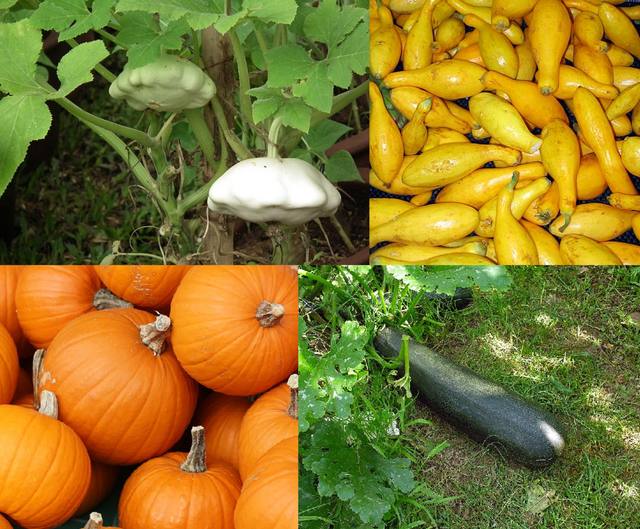
Photo: Various · CC BY-SA 1.0 · Wikimedia Commons

Zucchini
Cucurbita pepo
Also called Courgette, Pumpkin, Summer squash, Marrow
Vegetable · Family Cucurbitaceae · Native to Mexico and the southern United States
A sprawling or bushy squash that gives courgettes (zucchini) and many pumpkins. One plant gives many fruit, and it grows fast in warm weather.
The ASPCA lists this plant as non-toxic to cats and dogs
Care
Light
Full sun
Full sun, at least 6 to 8 hours. Shade gives few flowers and mildew-prone leaves.
Water
About every 3 days
Water deeply at the base, not over the leaves. Big leaves lose a lot of water in the heat, so check daily in a heatwave. It dies with frost, so the winter figure equals summer.
Water when the top 3 cm (1 in) of soil is dry
Humidity
Medium humidity
Normal outdoor humidity. Humid, still air brings mildew.
Temperature
18 to 30 °C (64 to 86 °F)
Best at 18 to 30 °C (64 to 86 °F). Frost kills it and growth slows below about 10 °C (50 °F).
Soil
Rich, moist, well-drained soil with lots of compost; pH 6 to 7. Plant on a mound or in a large pot of 30 litres or more.
Feeding
Every 2 weeks in the growing season
Feed with a high-potash fertiliser every 2 weeks once fruit starts. Heavy feeding with nitrogen gives leaves instead of fruit.
Repotting
Annual: sow each spring and plant out after frost. Rotate to a new bed each year.
Pruning
Pick courgettes at 15 to 20 cm (6 to 8 in) so the plant keeps fruiting. Remove old, yellow leaves for airflow.
Propagation
Sow seed 2 to 3 cm (1 in) deep after frost, or in pots indoors 3 to 4 weeks before. Seeds sprout in 5 to 10 days at 20 °C (68 °F).
Size
30 to 100 cm (12 to 39 in)
Fast growing
Outdoors
USDA zones 3 to 11
Grown as a summer annual in a sunny bed, 90 cm (3 ft) apart for bush types; trailing pumpkins need more room.
Eating
Young fruit (courgettes), ripe pumpkins, flowers and seeds
Very bitter fruit can be harmful (cucurbitacins); do not eat it.
Common problems
Flowers drop, small fruit rots
Poor pollination
Hand-pollinate: touch a male flower to a female flower, early morning.
White powder on leaves
Powdery mildew
Improve airflow and remove the worst leaves; water the soil, not the leaves.
Fruit rotting at the tip
Blossom end rot
Water evenly and mulch.
Plant wilts suddenly
Squash vine borer or wilt
Look for holes and sawdust at the base; remove affected plants.
Too many courgettes, then a marrow
Missed harvest
Harvest small and often, at 15 to 20 cm (6 to 8 in).
Did you know?
Each plant makes separate male and female flowers. The female has a tiny fruit behind the bloom, and the flowers are edible, often stuffed and fried.
General care information for a typical plant. Conditions in your home or garden may need a different rhythm.
Not sure what your plant is?
Identify a plant from a photoSee this guide in the appKagn Plants also keeps your own plants with watering reminders, and its plant doctor reads what is wrong with one.
Updated 22 November 2026.