Photo: Luis Miguel Bugallo Sánchez (Lmbuga) · CC BY-SA 4.0 · Wikimedia Commons

Sago palm
Cycas revoluta
Also called King sago, Japanese sago palm, Sago cycad
Houseplant · Family Cycadaceae · Native to Southern Japan (Ryukyu Islands)
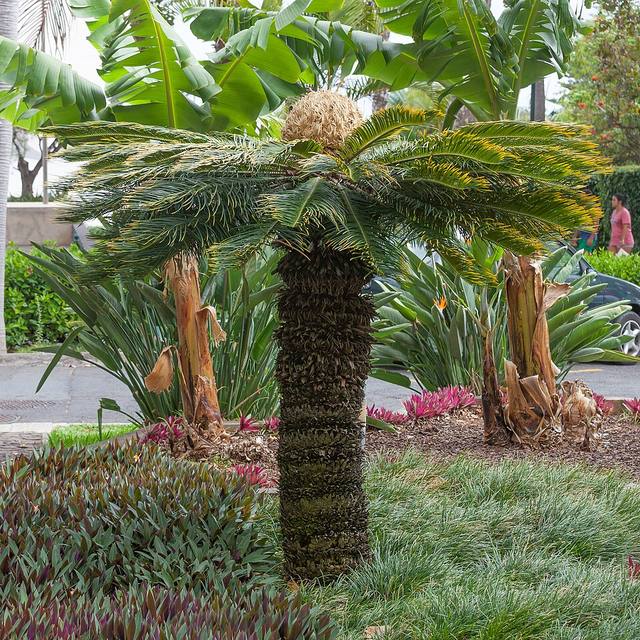
A slow-growing cycad with a stout trunk and a crown of stiff, glossy, feathered fronds. Despite the name it is not a palm, and every part is dangerous to pets.
Toxic to cats and dogs
Toxic principle: Cycasin
Signs: Vomiting, melena, icterus, increased thirst, hemorrhagic gastroenteritis, bruising, coagulopathy, liver damage, liver failure, death
Care
Light
Bright, indirect light
Bright light with some direct sun, such as a south or west window. In low light it grows few, weak fronds. Sun hardens its leaves.
Water
About every 14 days in the growing season, every 28 in the cool season
Water well, then let it dry. The thick trunk stores water, and overwatering rots it, which is the main way it is lost. Water little in winter.
Water when the top 5 cm (2 in) of soil is dry
Humidity
Low humidity
Normal room air is fine. It does not need misting.
Temperature
15 to 30 °C (59 to 86 °F)
Best at 15 to 30 °C (59 to 86 °F). Established plants tolerate light frost to about -5 °C (23 °F), but a young plant should stay above 5 °C (41 °F).
Soil
A gritty, fast-draining mix, such as cactus compost with extra sand or grit. Keep the trunk base above the soil. Needs drainage holes.
Feeding
Every 8 weeks in the growing season
Feed with a slow-release or half-strength fertiliser about every 8 weeks in spring and summer.
Repotting
Every 4 years
It is very slow and likes to be pot-bound. Repot every 3 to 5 years in spring into a heavy, drained pot.
Pruning
Cut off only fully brown or dead fronds at the base. Do not cut the crown; it will not branch.
Propagation
Pups (small offsets) grow at the trunk base. Cut them off in spring, dry the cut for a few days and plant in gritty mix; rooting is slow.
Size
60 to 150 cm (24 to 59 in)
Slow growing
Outdoors
USDA zones 9 to 11
Frost-free to mild-frost gardens in full sun to part shade with sharp drainage. Elsewhere grow in a pot and move it under cover for winter.
Common problems
Yellow fronds
Overwatering or poor drainage
Let the soil dry well, check the pot drains and remove yellow fronds.
Soft, rotting trunk base
Trunk rot
Stop watering, cut out soft parts and repot in dry gritty mix; it may not recover.
New fronds yellow and stunted
Nutrient shortage
Feed in spring with a balanced, slow-release fertiliser.
White, scaly patches on fronds
Scale insects
Scrub with soapy water or alcohol on a cloth and repeat weekly.
No new fronds for a year
Normal rest or low light
It makes a flush of fronds in spring or summer; give brighter light.
Did you know?
Cycads are very old plants, with relatives that grew alongside the dinosaurs. A sago palm is slow: it can take about 10 years to make a trunk 30 cm (12 in) tall.
General care information for a typical plant. Conditions in your home or garden may need a different rhythm.
Not sure what your plant is?
Identify a plant from a photoSee this guide in the appKagn Plants also keeps your own plants with watering reminders, and its plant doctor reads what is wrong with one.
Updated 22 November 2026.