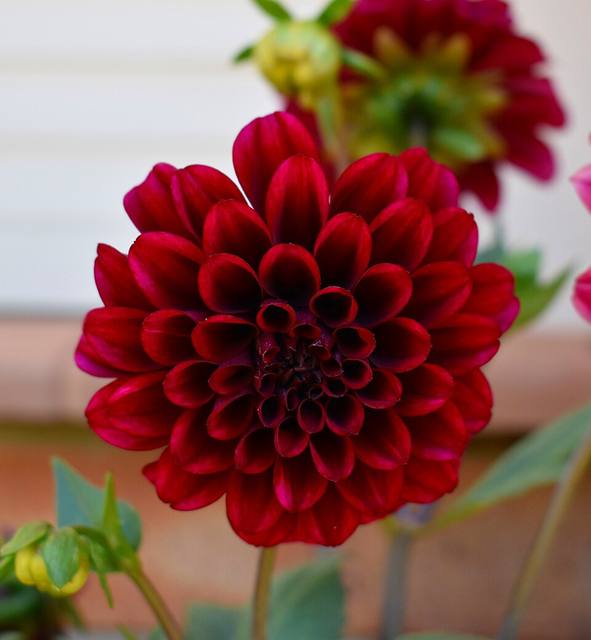
Photo: BRPever · CC BY-SA 4.0 · Wikimedia Commons

Dahlia
Dahlia
Also called Garden dahlia, Dahlia x hortensis
Garden flower · Family Asteraceae · Native to Mexico and Central America
A tuberous summer plant with showy flowers from small buttons to dinner-plate size. It flowers from midsummer until the first frost and cuts well.
Toxic to cats and dogs
Toxic principle: Unknown
Signs: Mild gastrointestinal signs, mild dermatitis
Care
Light
Full sun
Needs 6 to 8 hours of sun. In shade it grows tall and floppy and flowers little.
Water
About every 4 days in the growing season, every 30 in the cool season
Soak the bed once or twice a week in dry weather, not a little each day. Wet, cold soil rots the tuber. Stored winter tubers need almost no water, so check them monthly.
Water when the top 3 to 5 cm (1 to 2 in) of soil is dry
Humidity
Medium humidity
Outdoor humidity is no concern. Crowded plants in damp air can get mildew.
Temperature
15 to 27 °C (59 to 81 °F)
Grows best at 15 to 27 °C (59 to 81 °F). The leaves die at the first frost, about 0 °C (32 °F). Tubers freeze in wet ground.
Soil
Rich, well-drained soil with plenty of compost, in a sunny place. Slightly acid to neutral. Plant tubers 10 to 15 cm (4 to 6 in) deep after frost.
Feeding
Every 3 weeks in the growing season
Feed every 3 weeks from midsummer with a high-potash feed. Too much nitrogen early gives leaves and few flowers.
Repotting
Every 3 years
Lift tubers after the first frost, store dry and cool, and divide every 2 to 3 years in spring, each piece with an eye.
Pruning
Pinch out the growing tip when the plant has 3 pairs of leaves to make it bushy. Cut off faded flowers to keep it blooming. Stake tall types.
Propagation
Divide tubers in spring so that each piece has a bud, or take 8 cm (3 in) shoot cuttings from sprouting tubers in early spring.
Size
40 to 150 cm (16 to 59 in)
Fast growing
Outdoors
USDA zones 8 to 11
Tubers stay in the ground in mild winters in zones 8 to 11, under mulch. In colder climates lift them each autumn.
Common problems
Leaves and buds chewed, silvery trails
Slugs and snails
Check at night, pick them off and protect young shoots.
White powder on leaves
Powdery mildew in late summer
Water at the base, give more space and remove bad leaves.
Tall stems fall over
No support or too much shade
Stake early and give full sun.
Tubers rot in storage
Stored wet or too warm
Dry tubers well before storing. Keep them cool and slightly dry and check them.
Green or brown speckled leaves, deformed buds
Earwigs or aphids
Shake out insects early in the day and rinse aphids away.
Did you know?
Dahlia is the national flower of Mexico, where wild species grow in mountain meadows. The name honours the Swedish botanist Anders Dahl.
General care information for a typical plant. Conditions in your home or garden may need a different rhythm.
Not sure what your plant is?
Identify a plant from a photoSee this guide in the appKagn Plants also keeps your own plants with watering reminders, and its plant doctor reads what is wrong with one.
Updated 22 November 2026.