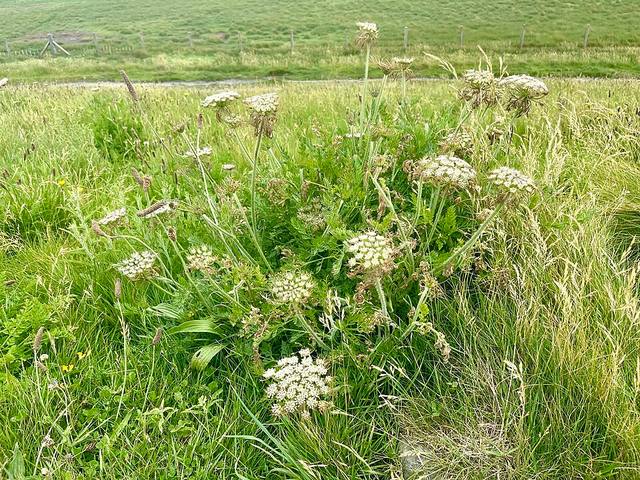
Photo: Kieran Roy Powell · CC BY 4.0 · Wikimedia Commons

Carrot
Daucus carota
Also called Garden carrot, Wild carrot, Queen Anne's lace
Vegetable · Family Apiaceae · Native to Southwest Asia and Europe
A cool-season root vegetable that gives sweet orange, and sometimes purple, yellow or white roots after 10 to 16 weeks. It needs deep, stone-free soil.
The ASPCA lists this plant as non-toxic to cats and dogs
Care
Light
Full sun
Full sun, at least 6 hours. It copes with light shade but then makes smaller roots.
Water
About every 4 days
Keep the seed bed evenly moist until sprouting, then water deeply but less often. Uneven watering makes roots split. Sown in spring and autumn, so the winter figure equals summer.
Water when the top 2 to 3 cm (1 in) of soil is dry
Humidity
Medium humidity
Ordinary outdoor humidity.
Temperature
10 to 25 °C (50 to 77 °F)
Best at 10 to 25 °C (50 to 77 °F). Established roots tolerate light frost to about -5 °C (23 °F); seed is slow in cold soil.
Soil
Deep, loose, stone-free, sandy loam; pH 6 to 7. Fresh manure makes forked roots. In pots, use one at least 30 cm (12 in) deep.
Feeding
Little or no feeding. Rich or recently manured soil causes hairy, forked roots. A low-nitrogen feed at thinning is enough if growth is weak.
Repotting
Annual: sow each year where it will grow, as carrots resent being moved. Rotate the bed.
Pruning
Thin seedlings to 5 cm (2 in) apart, then later to 8 cm (3 in). Do the thinning in the evening and firm the soil so the smell does not draw carrot fly.
Propagation
Sow seed thinly, 1 cm (0.5 in) deep, in rows 20 to 30 cm (8 to 12 in) apart. It sprouts in 1 to 3 weeks, slowly when cold.
Size
20 to 40 cm (8 to 16 in)
Medium growth
Outdoors
USDA zones 3 to 10
A cool-season annual crop, direct sown in beds from spring to summer. In mild winters, sow in autumn.
Eating
The root; young leaves can be eaten in small amounts
Wild carrot looks like poison hemlock, which is deadly. Never eat a wild plant you cannot identify.
Common problems
Forked or hairy roots
Stones, manure or too much nitrogen
Use stone-free, unmanured soil and fine, loose sowing beds.
Tunnels in roots
Carrot fly
Cover with fine mesh; thin in the evening.
Split roots
Uneven watering
Water evenly, and avoid a sudden soak after a dry spell.
Green shoulders
Roots exposed to light
Earth up the soil around the tops.
Poor or patchy sprouting
Dry soil or crusting
Keep the seed bed moist until seedlings are up.
Did you know?
Early carrots were purple or yellow. The orange kind became common after growers in the Netherlands selected it in the 1600s.
General care information for a typical plant. Conditions in your home or garden may need a different rhythm.
Not sure what your plant is?
Identify a plant from a photoSee this guide in the appKagn Plants also keeps your own plants with watering reminders, and its plant doctor reads what is wrong with one.
Updated 22 November 2026.