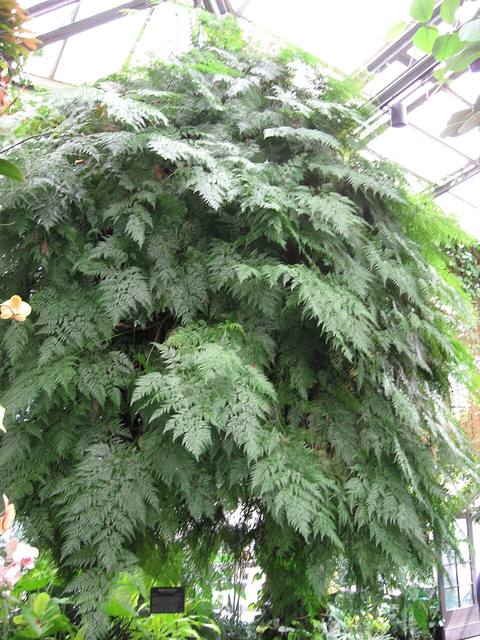
Photo: Chhe (talk) · Public domain · Wikimedia Commons

Rabbit's foot fern
Davallia fejeensis
Also called Dainty rabbit's foot fern, Lacy hare's foot, Fiji hare's foot
Houseplant · Family Davalliaceae · Native to Fiji and nearby Pacific islands
A fern with lacy, finely cut fronds and furry rhizomes that creep over the pot edge like rabbit's feet. It is attractive in a hanging pot and likes humidity.
The ASPCA lists this plant as non-toxic to cats and dogs
Care
Light
Bright, indirect light
Bright, filtered light or part shade. Direct sun scorches the fronds, and in dim light growth is thin.
Water
About every 5 days in the growing season, every 10 in the cool season
Keep the soil lightly moist but not soggy. Water the soil, not the furry rhizomes on top, which rot if kept wet. Water less in winter.
Water when the top 2 cm (1 in) of soil is dry
Humidity
High humidity
Likes high humidity. Group plants, use a pebble tray or a bathroom, since dry air browns the fronds.
Temperature
16 to 27 °C (61 to 81 °F)
Grows best at 16 to 27 °C (61 to 81 °F). Cold below 10 °C (50 °F) damages the fronds.
Soil
A light, airy, peaty mix with bark and perlite. Use a shallow pot or basket, and leave the rhizomes on the surface.
Feeding
Every 6 weeks in the growing season
Feed every 6 weeks in spring and summer with a quarter-strength balanced liquid feed. Ferns burn easily.
Repotting
Every 2 years
Repot every 2 years in spring into a shallow pot. Do not bury the furry rhizomes.
Pruning
Cut off old, brown fronds at the base. Do not cut the rhizomes.
Propagation
Cut a rhizome piece 5 cm (2 in) long with a few fronds and pin it on moist compost. It roots in a few weeks.
Size
30 to 50 cm (12 to 20 in)
Medium growth
Outdoors
USDA zones 10 to 11
Frost-free climates in shade, in baskets or on tree trunks. It grows over rocks and bark.
Common problems
Fronds turn brown and crisp
Dry air or dry soil
Raise humidity and keep the soil lightly moist.
Fronds yellow and fall
Overwatering or cold
Water less, let the top dry and keep it warm.
Rhizomes turn black and soft
Rot from wet rhizomes
Water the soil only and keep the rhizomes above it. Cut off rotten parts.
Pale, scorched fronds
Direct sun
Move to filtered light.
Little bumps on the frond underside
Spore cases, which are natural
No action: these are normal, not a pest.
Did you know?
Its furry, creeping stems are rhizomes that grow above the soil, which gave the plant its rabbit's foot name, and they can be left on the surface of the pot.
General care information for a typical plant. Conditions in your home or garden may need a different rhythm.
Not sure what your plant is?
Identify a plant from a photoSee this guide in the appKagn Plants also keeps your own plants with watering reminders, and its plant doctor reads what is wrong with one.
Updated 22 November 2026.