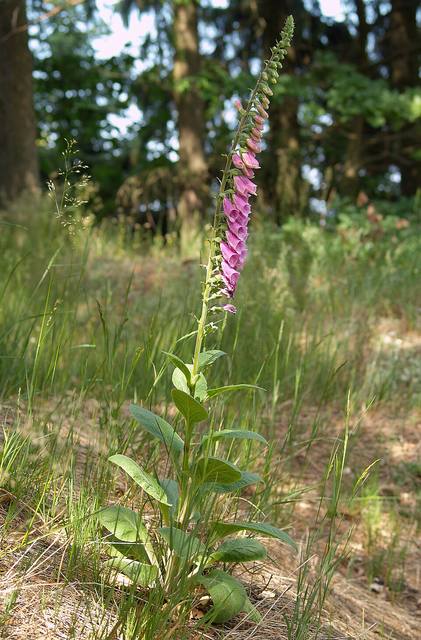
Photo: Jörg Hempel · CC BY-SA 3.0 de · Wikimedia Commons

Foxglove
Digitalis purpurea
Also called Common foxglove, Purple foxglove, Lady's glove
Garden flower · Family Plantaginaceae · Native to Western and southwestern Europe
A tall biennial with spires of bell-shaped flowers spotted inside. It is loved by bumblebees and grows well in light shade, but every part is poisonous.
Toxic to cats and dogs
Toxic principle: Cardiac glycosides
Signs: Cardiac arrhythmias, vomiting, diarrhea, weakness, cardiac failure, death.
Care
Light
Part sun
Part shade or dappled light is best. It tolerates sun if the soil is moist. Deep shade gives few flowers.
Water
About every 7 days in the growing season, every 21 in the cool season
Keep young plants moist in their first summer. Established plants manage on rain except in drought. Never leave it waterlogged in winter, when the rosette is resting.
Water when the top 3 cm (1 in) of soil is dry
Humidity
Medium humidity
Outdoor humidity is no concern. It likes cool, moist air.
Temperature
8 to 24 °C (46 to 75 °F)
Hardy to about -23 °C (-10 °F). Grows best at 8 to 24 °C (46 to 75 °F). It sulks in hot, dry summers.
Soil
Moist, humus-rich, well-drained soil, slightly acid. It dislikes dry, heavy clay and waterlogging.
Feeding
No regular feeding needed. A mulch of compost in spring is enough.
Repotting
A biennial: it makes leaves in year 1 and flowers in year 2. It is not divided or repotted. It self-seeds to replace itself.
Pruning
Cut the main spike after flowering for a few side spikes, or leave it to seed. Wear gloves when cutting or pulling, then wash your hands.
Propagation
Sow seed in early summer on the surface of moist mix. Plant out in autumn for flowers the next summer. It also self-seeds freely.
Size
90 to 180 cm (35 to 71 in)
Medium growth
Outdoors
USDA zones 4 to 9
Hardy in zones 4 to 9. Plant 30 to 45 cm (12 to 18 in) apart in part shade or at woodland edges.
Common problems
Plant dies after flowering
Biennial life cycle
It is not a loss. Let it seed or sow again so you have plants flowering each year.
Only leaves, no flower spikes
First-year plant
The flower spike comes in the second year.
Tall spikes fall over
Wind or rich soil
Stake or plant in shelter.
Brown spots, white fuzz on leaves
Leaf spot or powdery mildew
Remove affected leaves, give more space and avoid wetting leaves.
Holes chewed in leaves
Slugs and snails
Check at night and protect young plants.
Did you know?
Foxglove leaves gave medicine its heart drug digoxin, first described by William Withering in 1785.
General care information for a typical plant. Conditions in your home or garden may need a different rhythm.
Not sure what your plant is?
Identify a plant from a photoSee this guide in the appKagn Plants also keeps your own plants with watering reminders, and its plant doctor reads what is wrong with one.
Updated 22 November 2026.