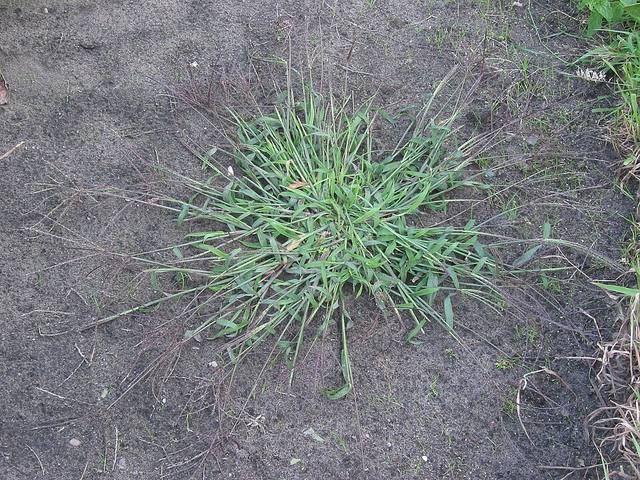
Photo: Rasbak · CC BY-SA 3.0 · Wikimedia Commons

Crabgrass
Digitaria sanguinalis
Also called Large crabgrass, Hairy crabgrass
Lawn weed · Family Poaceae · Native to Europe and Asia (widely naturalised)
A summer annual grass that forms flat, spreading rosettes in lawns and beds. It sprouts in warm weather from thousands of seeds and dies at the first frost.
Not on the ASPCA's list: keep it out of reach of pets.
Care
Light
Full sun
Thrives in full sun and bare, thin lawn. It does not like shade.
Water
About every 7 days
It grows in summer when the soil is warm and moist. It dies at frost, so winter interval equals summer. Frequent shallow watering helps it; deep, less frequent watering favours lawn grass.
It thrives in the usual lawn watering and short grass
Humidity
Medium humidity
Likes warm, humid summers. Outdoor humidity is no concern.
Temperature
20 to 35 °C (68 to 95 °F)
Germinates when soil reaches 13 to 15 °C (55 to 59 °F), grows best at 20 to 35 °C (68 to 95 °F) and dies at the first frost, around 0 °C (32 °F).
Soil
Any soil, especially thin, dry, compacted or bare soil. Lawn grass that is cut too short lets sun reach the soil and seeds sprout.
Feeding
Do not feed it. A well-fed, thick lawn out-competes it.
Repotting
Nothing to repot. It dies each winter, and its seeds carry it forward.
Pruning
Mow the lawn at 7 to 9 cm (3 to 3.5 in) in summer to shade the soil. Pull plants by hand before seed heads form in late summer.
Propagation
It spreads only by seed. A plant makes thousands of seeds, so the best control is to stop them setting: pull or cut before late summer.
Size
10 to 60 cm (4 to 24 in)
Fast growing
Outdoors
USDA zones 2 to 11
Found on lawns, paths and beds across temperate and warm regions. It needs warm soil to sprout and is gone after frost.
Common problems
Spreading flat clumps of coarse grass
Seed germinating in warm, thin turf
Hand pull in early summer, then mow high and water deeply, less often.
It comes back every summer
Seed bank in the soil
Overseed bare patches in autumn. A pre-emergent or thick turf stops sprouting in spring.
Pulling leaves roots and it regrows
Roots break in dry soil
Water the soil first, pull whole plants with roots.
Weed killers harm the lawn
Wrong product or timing
Use a product labelled for lawns on actively growing crabgrass. Follow the label.
Bare patches after pulling
Soil is left open
Rake and sow lawn seed or lay turf straight away.
Did you know?
The seed was once harvested as a cereal in parts of Europe, where it was called manna grass or Polish millet.
General care information for a typical plant. Conditions in your home or garden may need a different rhythm.
Not sure what your plant is?
Identify a plant from a photoSee this guide in the appKagn Plants also keeps your own plants with watering reminders, and its plant doctor reads what is wrong with one.
Updated 22 November 2026.