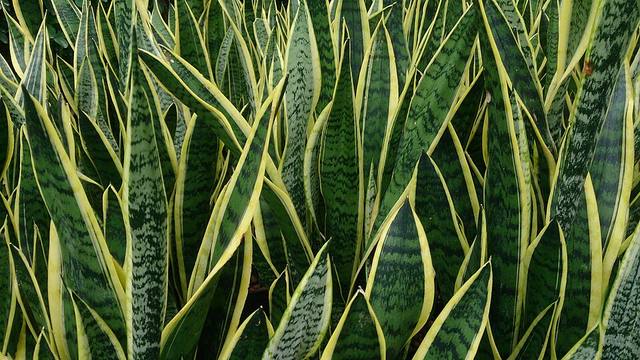
Photo: Mokkie · CC BY-SA 3.0 · Wikimedia Commons

Snake plant
Dracaena trifasciata
Also called Mother-in-law's tongue, Viper's bowstring hemp, Good luck plant
Houseplant · Family Asparagaceae · Native to Tropical West Africa
A tough plant with upright, sword-shaped leaves, often striped in cream or yellow. It copes with low light and long gaps between waterings.
Toxic to cats and dogs
Toxic principle: Saponins
Signs: Nausea, vomiting, diarrhea
Care
Light
Medium light
Grows in anything from low to bright light, but best in bright indirect light. Pale, floppy leaves mean too little light. Direct summer sun can scorch it.
Water
About every 16 days in the growing season, every 35 in the cool season
Water thoroughly, then let the pot dry out completely. Overwatering is the one thing that kills it: the roots rot while the leaves still look fine.
Water when the soil is dry all the way down
Humidity
Low humidity
Happy in dry household air. It needs no misting.
Temperature
15 to 30 °C (59 to 86 °F)
Best at 15 to 30 °C (59 to 86 °F). Cold below about 10 °C (50 °F) marks the leaves.
Soil
Fast-draining cactus or succulent mix. A heavy, wet mix is the commonest cause of failure. Use a pot with a drainage hole.
Feeding
Every 8 weeks in the growing season
Feed lightly every 8 weeks in spring and summer with a diluted fertiliser. None in winter.
Repotting
Every 3 years
Repot every 3 years or sooner if roots push the pot apart. Use a heavy pot: tall plants tip over.
Pruning
Cut off damaged leaves at the base. Do not trim leaf tips: the cut edge stays brown.
Propagation
Divide the plant at the roots, or cut a leaf into 5 cm (2 in) sections and root them in damp soil. Leaf cuttings of striped forms lose the stripes.
Size
30 to 120 cm (12 to 47 in)
Slow growing
Outdoors
USDA zones 9 to 11
Grows outdoors in warm, frost-free climates in part shade to sun. In some warm regions it spreads by runners.
Common problems
Soft, yellow, collapsing leaves
Root rot from overwatering
Stop watering, unpot, cut off black roots and repot in dry gritty mix.
Wrinkled, curling leaves
Underwatering over a long time
Water thoroughly; it recovers in a few weeks.
Brown tips or patches
Cold, sunburn or fluoride in tap water
Move away from cold windows and strong sun; use rain or filtered water.
Leaves flop over
Too little light or too much water
Give brighter light and let the soil dry fully.
Cottony white spots
Mealybugs
Wipe with a cloth dipped in rubbing alcohol and check again weekly.
Did you know?
NASA tested it in a 1989 study on cleaning air in sealed chambers, but a house has far too much air for one plant to make a real difference.
General care information for a typical plant. Conditions in your home or garden may need a different rhythm.
Not sure what your plant is?
Identify a plant from a photoSee this guide in the appKagn Plants also keeps your own plants with watering reminders, and its plant doctor reads what is wrong with one.
Updated 22 November 2026.