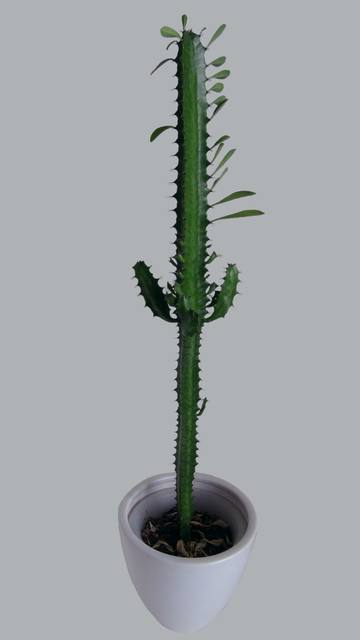
Photo: Totteandersson1 · CC BY-SA 3.0 · Wikimedia Commons

African milk tree
Euphorbia trigona
Also called Abyssinian euphorbia, Cathedral cactus, Good luck cactus
Succulent or cactus · Family Euphorbiaceae · Native to Central Africa
A tall, upright succulent with ridged green stems like a candelabra and small leaves along the ridges. It is not a cactus, and its white sap is irritating.
The ASPCA lists a close relative, pencil Cactus (Euphorbia tirucalli), as toxic to cats and dogs: treat this plant the same.
Care
Light
Full sun
Bright light with several hours of direct sun a day. In low light it stretches and leans. Move it into hot sun gradually to avoid scorch.
Water
About every 18 days in the growing season, every 35 in the cool season
Soak the pot, let it drain, then wait until it is fully dry. It drops its small leaves when dry, which is normal. Wet soil in winter rots the base.
Water when the soil is dry all the way down
Humidity
Low humidity
Dry home air suits it. No extra humidity needed.
Temperature
16 to 30 °C (61 to 86 °F)
Keep it at 16 to 30 °C (61 to 86 °F). Damage begins below about 10 °C (50 °F), so keep it indoors in winter.
Soil
A fast-draining cactus mix with extra grit or perlite. Use a heavy pot with drainage holes, since it becomes tall and top-heavy.
Feeding
Every 8 weeks in the growing season
Feed every 8 weeks in spring and summer with a half-strength cactus or houseplant fertiliser. Do not feed in winter.
Repotting
Every 3 years
Repot every 3 years in spring into a heavy pot only slightly larger. Wear gloves and eye protection, because the sap irritates.
Pruning
Cut branches back in spring to shape it, using gloves and wearing eye protection. White sap runs from every cut, and it irritates skin and eyes. Rinse the cut with water.
Propagation
Take a branch cutting in spring using gloves, let the cut end dry and callus for a week, then plant it in gritty mix. Water lightly once roots form.
Size
60 to 200 cm (24 to 79 in)
Medium growth
Outdoors
USDA zones 10 to 12
Grows outdoors in full sun in frost-free, dry gardens as a tall hedge or specimen. Elsewhere it lives in a pot and comes indoors for winter.
Common problems
Soft, brown stem base
Overwatering and rot
Stop watering. Cut healthy tissue above any rot and re-root it in dry gritty mix.
Leaves drop
Dry soil or cold
Small leaf drop is normal. Check watering and keep it warm.
Leaning, stretched stems
Too little light
Move to a sunny window or add grow light.
Brown scorch marks
Sudden strong sun
Move it into sun gradually over a week or two.
White cottony fluff
Mealybugs
Dab with a cotton bud dipped in rubbing alcohol. Take care with the sap.
Did you know?
The milky sap is a defence against grazing animals and can burn skin and eyes. It is a spurge, and spurges evolved this trait many times.
General care information for a typical plant. Conditions in your home or garden may need a different rhythm.
Not sure what your plant is?
Identify a plant from a photoSee this guide in the appKagn Plants also keeps your own plants with watering reminders, and its plant doctor reads what is wrong with one.
Updated 22 November 2026.