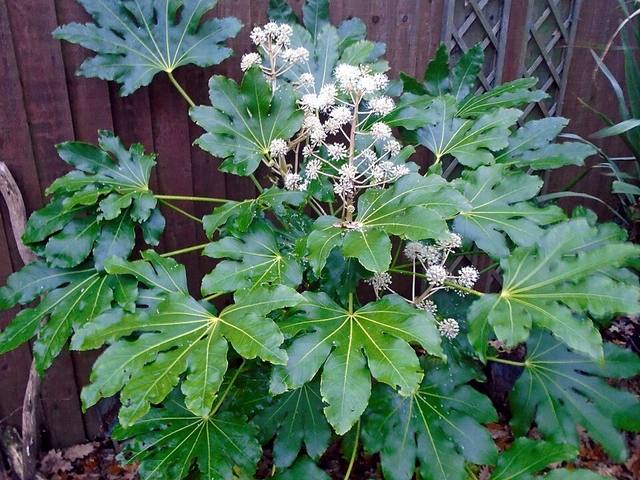
Photo: Orengi Harvey · CC BY-SA 4.0 · Wikimedia Commons

Japanese aralia
Fatsia japonica
Also called Fatsia, Figleaf palm, Glossy-leaved paper plant
Shrub · Family Araliaceae · Native to Japan and southern Korea
A bold shrub with large, glossy, hand-shaped leaves and ball-like clusters of white flowers in autumn. It is tough, good in shade, and also grown as a houseplant.
The ASPCA lists this plant as non-toxic to cats and dogs
Care
Light
Medium light
Bright shade or filtered light indoors or out. Direct strong sun scorches the leaves. In deep shade it grows leggy, but it copes better than most shrubs.
Water
About every 7 days in the growing season, every 14 in the cool season
Water well, then let the top dry. Indoors it is thirsty in summer and wilts dramatically when dry. Outdoors, established plants need water only in drought.
Water when the top 3 to 5 cm (1 to 2 in) of soil is dry
Humidity
Medium humidity
Normal home air is fine. Dry, heated air invites spider mites.
Temperature
5 to 24 °C (41 to 75 °F)
Grows at 5 to 24 °C (41 to 75 °F). It likes a cool room. Outdoors it survives to about -10 °C (14 °F), though hard frost can scorch the leaves.
Soil
A rich, moist, well-draining potting mix, or humus-rich soil outdoors. Use a pot with drainage holes. It tolerates most soils.
Feeding
Every 4 weeks in the growing season
Feed every 4 weeks in spring and summer with a general houseplant feed, or mulch outdoor plants in spring. Do not feed in winter.
Repotting
Every 2 years
Repot every 2 years in spring, one size up. It grows fast and soon fills a pot.
Pruning
Cut back leggy stems in spring to make it bushy, cutting above a leaf. Remove frost-damaged leaves in spring. It regrows from hard pruning.
Propagation
Take stem cuttings in summer, or remove suckers with roots in spring. Root cuttings in damp, gritty mix with warmth.
Size
100 to 300 cm (39 to 118 in)
Fast growing
Outdoors
USDA zones 8 to 10
Grows outdoors in part to full shade, in sheltered spots, as a foliage shrub. Give it 1.5 to 2.5 m (5 to 8 ft) of room. Protect from cold, drying winds.
Common problems
Leaves droop suddenly
Thirst, or heat
Water it well: it recovers in a few hours. Move it out of hot sun.
Yellow leaves
Overwatering or poor drainage
Let the soil dry between waterings, and check the pot drains.
Brown, scorched leaf edges
Direct sun, frost, wind or dry air
Move to shade, away from cold wind.
Fine webbing, speckled leaves
Spider mites in dry, warm air
Rinse the leaves and repeat weekly.
Leggy, sparse growth
Too much shade or no pruning
Cut back in spring and give brighter light.
Did you know?
It flowers in late autumn, when bees and flies have few other flowers, and the big leaves look tropical though the plant is hardy to about -10 °C (14 °F).
General care information for a typical plant. Conditions in your home or garden may need a different rhythm.
Not sure what your plant is?
Identify a plant from a photoSee this guide in the appKagn Plants also keeps your own plants with watering reminders, and its plant doctor reads what is wrong with one.
Updated 22 November 2026.