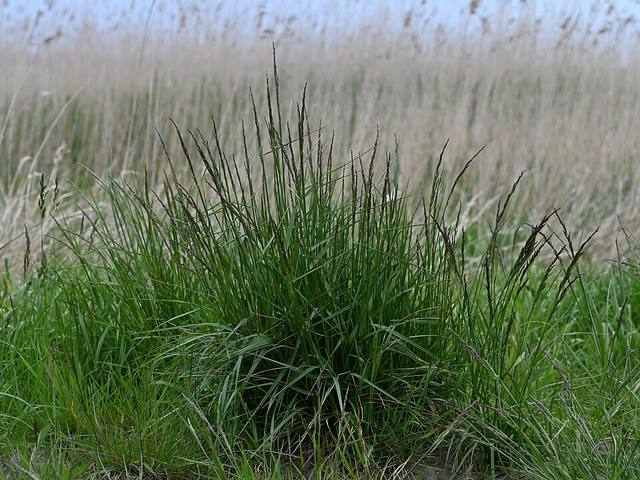
Photo: Krzysztof Ziarnek, Kenraiz · CC BY-SA 4.0 · Wikimedia Commons

Tall fescue
Festuca arundinacea
Also called Reed fescue, Alta fescue
Lawn weed · Family Poaceae · Native to Europe and western Asia
A tough, deep-rooted bunch grass with wide, coarse blades. It is sown as lawn and pasture, but shows up as clumps of coarse grass in fine lawns where it is unwelcome.
Not on the ASPCA's list: keep it out of reach of pets.
Care
Light
Full sun
Grows in full sun to part shade. It tolerates more shade and heat than most cool-season grasses.
Water
About every 7 days in the growing season, every 14 in the cool season
Deep roots let it survive drought better than fine grasses. Water deeply once a week in dry weather. In winter it slows, and rain usually covers it.
Water when blades fold or grey, about 2.5 cm (1 in) a week
Humidity
Medium humidity
Outdoor humidity is no concern. Humid, warm nights bring brown patch.
Temperature
15 to 28 °C (59 to 82 °F)
Hardy to about -30 °C (-22 °F). Grows best at 15 to 28 °C (59 to 82 °F). It stays green through mild winters.
Soil
Fertile, heavy or clay soil, pH 5.5 to 7.5. It tolerates wet and dry spells, poor drainage and compaction.
Feeding
Every 8 weeks in the growing season
On a lawn, feed in autumn and spring. Heavy feeding in summer encourages disease.
Repotting
Nothing to repot. Lift clumps in spring if removing them from a lawn.
Pruning
In a lawn, mow at 6 to 8 cm (2.5 to 3 in). To remove a clump from a fine lawn, dig it out with a spade, taking the whole root.
Propagation
Sow seed in early autumn or spring. A coarse clump in a fine lawn is removed with a spade and the bare spot reseeded with the lawn mix.
Size
60 to 150 cm (24 to 59 in)
Medium growth
Outdoors
USDA zones 4 to 8
Grows across cool-temperate and transition zones. Common in pastures, roadsides and lawns.
Common problems
Coarse clumps in a fine lawn
Tall fescue spreads as bunches, not as a mat
Dig the clump out with roots and reseed. Do not spray: weed killers harm the nearby grass.
Clump regrows after cutting
Roots left behind
Dig 8 to 10 cm (3 to 4 in) deep and remove the whole crown.
Brown patches in hot humid weather
Brown patch fungus
Water in the morning, avoid overfeeding with nitrogen in summer.
Thin lawn
Old stand, shade or compaction
Overseed in early autumn and aerate in spring.
Grazing animals sick
Fungal endophyte in some pasture grass
In pasture, plant certified endophyte-free or safe-endophyte seed.
Did you know?
Many tall fescue pastures carry a fungus inside the grass that makes it hardy but can harm livestock, a problem seed breeders now work around.
General care information for a typical plant. Conditions in your home or garden may need a different rhythm.
Not sure what your plant is?
Identify a plant from a photoSee this guide in the appKagn Plants also keeps your own plants with watering reminders, and its plant doctor reads what is wrong with one.
Updated 22 November 2026.