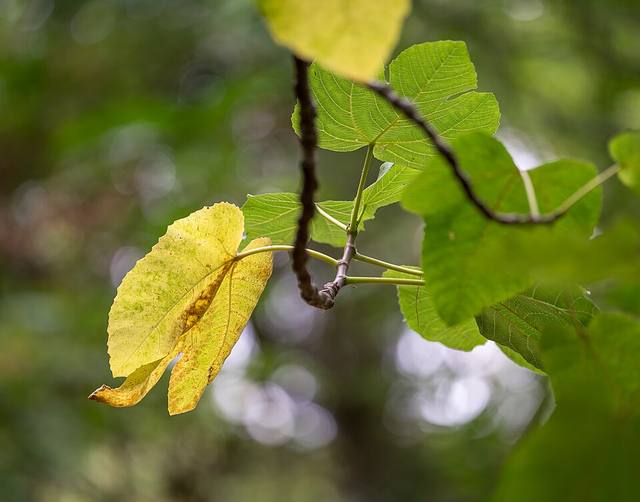
Photo: Jules Verne Times Two · CC BY-SA 4.0 · Wikimedia Commons

Common fig
Ficus carica
Also called Fig, Fig tree, Edible fig
Tree · Family Moraceae · Native to Mediterranean and western Asia
A deciduous tree with large, lobed leaves and sweet fruit. It is grown for its figs in warm gardens and for its leaves in cooler regions, where it can be trained against a wall.
Toxic to cats and dogs
Toxic principle: Proteolytic enzyme (ficin), psoralen (ficusin)
Care
Light
Full sun
Full sun, 6 or more hours a day, and a warm, sheltered spot. In shade it makes leaves but little fruit. Indoors, the brightest window in summer is needed.
Water
About every 7 days in the growing season, every 30 in the cool season
Water deeply in the growing season, especially when fruit swells. In pots, never let the soil dry out fully in summer. In winter, when leafless, give almost no water.
Water when the top 5 cm (2 in) of soil is dry
Humidity
Low humidity
Normal room humidity is fine.
Temperature
15 to 32 °C (59 to 90 °F)
Best at 15 to 32 °C (59 to 90 °F). Hardy to about -10 °C (14 °F) when dormant; frost can damage buds and young shoots.
Soil
Well-drained, moderately fertile soil, pH 6 to 7.5. Restrict roots in a pot or bed for better fruit.
Feeding
Every 4 weeks in the growing season
Feed every 4 weeks in spring and summer with a balanced or high-potassium fertiliser. Too much nitrogen gives leaves, not fruit.
Repotting
Every 3 years
Repot a potted tree every 3 years in late winter, or root-prune. In the ground, nothing to do.
Pruning
Prune in late winter when dormant, to shape and remove dead wood. Pinch tips in summer to keep it compact. Wear gloves: the sap irritates skin.
Propagation
Take hardwood cuttings in winter 20 cm (8 in) long and plant them in soil. Or layer a low branch. Roots usually form by spring.
Size
200 to 600 cm (79 to 236 in)
Fast growing
Outdoors
USDA zones 7 to 10
Grows outdoors in warm, sheltered spots in full sun. Space 3 to 5 m (10 to 16 ft) apart. In cooler regions train against a south wall or grow in a pot.
Eating
Ripe fruit (figs)
The milky sap irritates skin and leaves and sap are not for eating.
Common problems
Fruit falls unripe
Irregular watering or cold
Keep the soil evenly moist and sheltered.
Leaves yellow and drop in summer
Drought or overwatering
Check the soil and adjust.
Lots of leaves, little fruit
Too much nitrogen or shade
Move to full sun and reduce nitrogen.
Frost-blackened shoots
Cold snap
Cut back damaged growth in spring.
Sap irritates skin
Milky sap
Wear gloves and long sleeves when pruning.
Did you know?
A fig is not a fruit but a hollow stem bud with hundreds of tiny flowers inside. In the wild, one wasp species pollinates it, entering through a tiny hole.
General care information for a typical plant. Conditions in your home or garden may need a different rhythm.
Not sure what your plant is?
Identify a plant from a photoSee this guide in the appKagn Plants also keeps your own plants with watering reminders, and its plant doctor reads what is wrong with one.
Updated 22 November 2026.