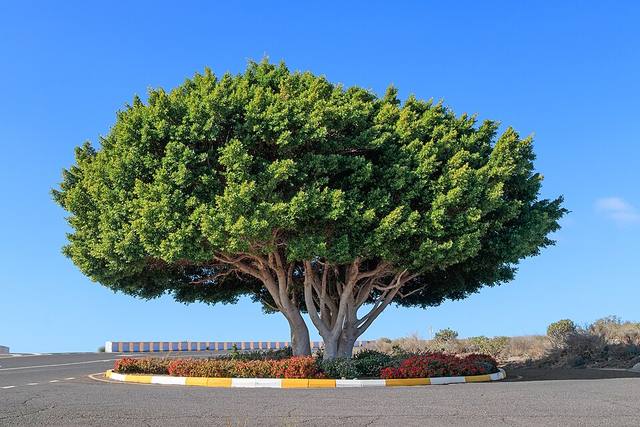
Photo: H. Zell · CC BY-SA 3.0 · Wikimedia Commons

Ginseng ficus
Ficus microcarpa
Also called Chinese banyan, Indian laurel fig, Taiwan banyan
Houseplant · Family Moraceae · Native to Southern China and Southeast Asia to Australia
A small tree with a swollen, root-like trunk base and glossy oval leaves, usually grown as a bonsai or tabletop plant. It is tough and forgiving of a missed watering.
Toxic to cats and dogs
Toxic principle: Proteolytic enzyme (ficin), psoralen (ficusin)
Care
Light
Bright, indirect light
Give it a bright spot with a few hours of gentle sun. In dim rooms it drops leaves and grows lanky. Move it slowly: sudden changes make it shed leaves.
Water
About every 10 days in the growing season, every 18 in the cool season
Water well until it drains, then let the top dry. Soggy soil is the main killer. Leaves dropping after a move or a draught is common and the plant usually regrows.
Water when the top 3 cm (1 in) of soil is dry
Humidity
Medium humidity
Average home air is fine. Mist or a pebble tray helps in dry winter rooms with heating.
Temperature
16 to 29 °C (61 to 84 °F)
Grows best at 16 to 29 °C (61 to 84 °F). Cold below 10 °C (50 °F) and cold draughts make leaves drop.
Soil
A free-draining potting mix with some grit or bark. Bonsai growers use a gritty mix. The pot must have drainage holes.
Feeding
Every 4 weeks in the growing season
Feed every 4 weeks from spring to early autumn with a balanced liquid feed at half strength. Do not feed in winter.
Repotting
Every 2 years
Repot every 2 years in spring, or sooner if roots fill the pot. Keep the swollen trunk base above the soil.
Pruning
Prune in spring to keep the shape. Cut back long shoots to 2 leaves. White sap bleeds from cuts, so wear gloves and wipe the sap off.
Propagation
Stem cuttings in spring root in warm, moist soil. The swollen trunk base is grown for years from seed or air layering, which takes time.
Size
30 to 100 cm (12 to 39 in)
Medium growth
Outdoors
USDA zones 10 to 12
In frost-free climates it becomes a very large banyan tree with aerial roots, so it is not planted near buildings. In cold climates it lives in a pot.
Common problems
Leaves turn yellow and drop
Too much water, or a move or draught
Let the top 3 cm (1 in) dry before watering and keep it in one steady, bright place.
Leaves drop after buying it
Change of light and place
Keep it in a bright spot and do not move it again. New leaves usually come in 4 to 6 weeks.
Sticky leaves and white fluff
Mealybugs or scale insects
Wipe them off with soapy water on a cotton bud and repeat weekly.
Brown, crisp leaf edges
Dry air or too little water
Water more evenly and move away from heaters.
Long gaps between leaves
Too little light
Move to a brighter spot and prune back to a pair of leaves.
Did you know?
In the wild it grows from seeds dropped by birds into tree cracks, then sends roots down to the ground and can strangle the host tree, hence the name banyan.
General care information for a typical plant. Conditions in your home or garden may need a different rhythm.
Not sure what your plant is?
Identify a plant from a photoSee this guide in the appKagn Plants also keeps your own plants with watering reminders, and its plant doctor reads what is wrong with one.
Updated 22 November 2026.