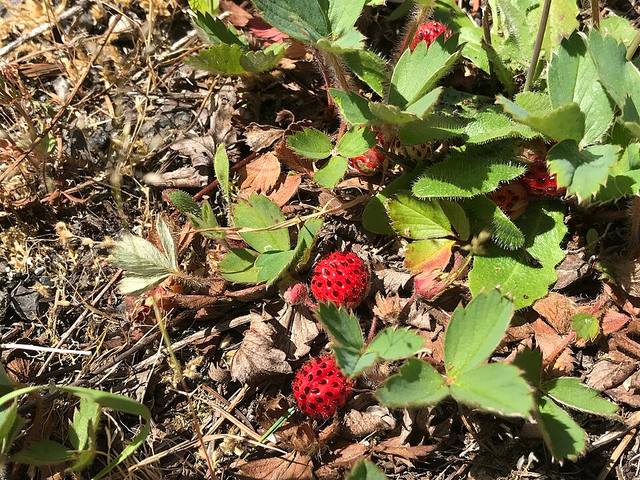
Photo: Aaron Liston · CC BY 4.0 · Wikimedia Commons

Strawberry
Fragaria ananassa
Also called Garden strawberry
Vegetable · Family Rosaceae · Native to Garden hybrid (parents from North and South America)
A low, spreading perennial that gives sweet red berries in early summer. It grows in beds, pots, hanging baskets and strawberry towers.
The ASPCA lists this plant as non-toxic to cats and dogs
Care
Light
Full sun
Full sun, at least 6 hours, for the sweetest fruit. Part shade still crops but gives fewer, less sweet berries.
Water
About every 3 days in the growing season, every 10 in the cool season
Water at the soil level, steadily, from flowering to harvest. Dry spells give small, hard fruit, and wet leaves invite grey mould. In winter plants rest, so water much less.
Water when the top 2 to 3 cm (1 in) of soil is dry
Humidity
Medium humidity
Ordinary outdoor humidity. Wet, humid weather brings grey mould on fruit.
Temperature
10 to 25 °C (50 to 77 °F)
Best at 10 to 25 °C (50 to 77 °F). Hardy to about -20 °C (-4 °F) in winter, but open flowers are hurt by spring frost.
Soil
Rich, well-drained, slightly acid soil, pH 5.5 to 6.5, with compost. Pots need drainage holes; plant with the crown at soil level.
Feeding
Every 4 weeks in the growing season
Feed with a high-potash fertiliser every 3 to 4 weeks from flowering to harvest. Skip it in winter.
Repotting
Every 3 years
Replace plants every 3 to 4 years, as yield falls. Divide or take new runners, and plant them in a new place.
Pruning
Cut off runners unless you want new plants. After harvest, trim old leaves and mow or shear lightly. Remove dead leaves in autumn.
Propagation
Peg runners (long stems with a baby plant) into pots of soil in summer. Cut them free after 4 to 6 weeks when rooted.
Size
15 to 30 cm (6 to 12 in)
Medium growth
Outdoors
USDA zones 5 to 9
Hardy perennial in sun, 30 to 45 cm (12 to 18 in) apart. Straw or mulch under the fruit keeps it clean.
Eating
Fruit
Common problems
Grey fuzzy mould on fruit
Botrytis (grey mould)
Remove affected fruit, mulch under berries, improve air flow and water at the soil.
Small, hard berries
Too little water or shade
Water steadily and give full sun.
Fruit nibbled by slugs and birds
Pests
Use nets and slug protection; pick early.
Few flowers
Young plant or too much shade
Move to full sun; renew old plants.
Leaves with purple or red spots
Leaf spot or hunger
Remove spotted leaves and feed after harvest.
Did you know?
A strawberry is not a true berry: the red flesh is a swollen flower base, and the 'seeds' on the outside are each a tiny fruit.
General care information for a typical plant. Conditions in your home or garden may need a different rhythm.
Not sure what your plant is?
Identify a plant from a photoSee this guide in the appKagn Plants also keeps your own plants with watering reminders, and its plant doctor reads what is wrong with one.
Updated 22 November 2026.