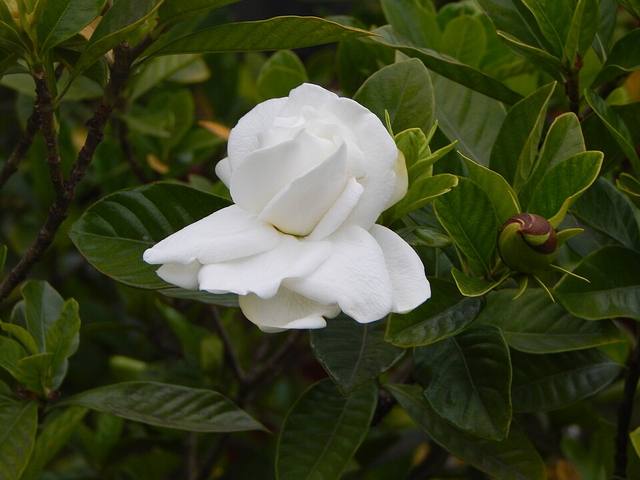
Photo: Adriel anv00 · CC BY-SA 4.0 · Wikimedia Commons

Cape jasmine
Gardenia jasminoides
Also called Gardenia, Common gardenia
Shrub · Family Rubiaceae · Native to Southern China, Taiwan and Japan
A shrub with glossy dark leaves and very fragrant, creamy white flowers. It is a favourite in warm gardens but a fussy houseplant that sulks over small changes.
Toxic to cats and dogs
Toxic principle: Genioposide, gardenoside
Signs: Mild vomiting and/or diarrhea, hives
Care
Light
Bright, indirect light
Bright light with some morning sun, and shade from hot afternoon sun. Too little light means few buds. Moving it while in bud makes the buds fall off.
Water
About every 5 days in the growing season, every 9 in the cool season
Keep the mix lightly moist and never soggy or bone dry. Use rainwater or soft water, because hard tap water raises the pH and turns leaves yellow.
Keep the soil evenly moist; water when the top 1 cm (0.5 in) feels dry
Humidity
High humidity
It likes humid air. Stand it on a tray of damp pebbles or group it with other plants. Dry heating air makes buds drop.
Temperature
16 to 24 °C (61 to 75 °F)
Keep it at 16 to 24 °C (61 to 75 °F), with cooler nights to set buds. It is damaged below about 5 °C (41 °F). Avoid heat sources and cold draughts.
Soil
Acidic, humus-rich, well-draining mix, pH 5 to 6. Use ericaceous (acid-loving plant) potting mix. Lime or chalky soil gives yellow leaves.
Feeding
Every 3 weeks in the growing season
Feed every 3 weeks in the growing season with an acid-loving plant feed that contains iron. Stop in winter.
Repotting
Every 2 years
Repot every 2 years in spring, into acidic mix, only one size up. It dislikes root disturbance.
Pruning
After flowering, trim back by about a third to keep it compact. Take off dead flowers. Do not prune hard, as it is slow to recover.
Propagation
Take 10 cm (4 in) semi-ripe cuttings in summer, dip in rooting powder and keep humid and warm. Rooting takes 6 to 8 weeks and is slow.
Size
40 to 120 cm (16 to 47 in)
Slow growing
Outdoors
USDA zones 8 to 11
Grows outdoors in part shade, in acidic, moist soil in mild climates. In cooler zones, grow it in a pot and bring it in for winter.
Common problems
Yellow leaves with green veins
Iron deficiency from alkaline soil or hard water
Use acid-loving plant mix and feed, and water with rainwater.
Buds turn brown and drop
Moving it, dry air, cold draughts or irregular watering
Keep it in one bright spot, humid and warm, with even watering.
Sticky leaves and white fluff
Mealybugs or scale
Dab with a cotton bud dipped in rubbing alcohol, and repeat weekly.
Black sooty film on leaves
Sooty mould from sap-sucking insects
Wipe off and treat the insects causing it.
Leaf drop in winter
Cold, or soil too dry or too wet
Keep it above 10 °C (50 °F) and evenly moist.
Did you know?
Gardenia flowers have been used for perfume for centuries, and the fruit gives a yellow dye still used in food and fabric in East Asia.
General care information for a typical plant. Conditions in your home or garden may need a different rhythm.
Not sure what your plant is?
Identify a plant from a photoSee this guide in the appKagn Plants also keeps your own plants with watering reminders, and its plant doctor reads what is wrong with one.
Updated 22 November 2026.