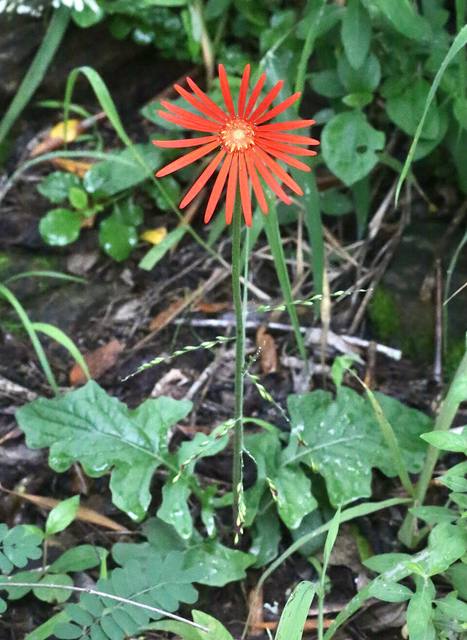
Photo: Alexey Yakovlev · CC BY-SA 4.0 · Wikimedia Commons

Gerbera daisy
Gerbera jamesonii
Also called Gerbera, Barberton daisy, Transvaal daisy
Garden flower · Family Asteraceae · Native to Southern Africa (Barberton, South Africa)
A bright daisy with big flowers in nearly every colour but blue, borne on single bare stems. It is sold as a pot plant and cut flower and is grown in beds in warm climates.
The ASPCA lists this plant as non-toxic to cats and dogs
Care
Light
Full sun
Bright light with 4 to 6 hours of sun. Indoors place it at a sunny window. In shade it makes leaves and few flowers.
Water
About every 5 days in the growing season, every 10 in the cool season
Water at the base and do not wet the crown. A wet crown rots, so do not bury it. Stand the pot in a saucer for 20 minutes, then empty it. Water less in winter.
Water when the top 3 cm (1 in) of mix is dry
Humidity
Medium humidity
Normal air is fine. Avoid misting the crown. Still, damp air brings mildew.
Temperature
10 to 24 °C (50 to 75 °F)
Best at 10 to 24 °C (50 to 75 °F). It is damaged by frost near 0 °C (32 °F) and slows in heat above 30 °C (86 °F).
Soil
Light, well-drained, slightly acid soil with compost, pH 5.5 to 6.5. Plant with the crown just above soil level.
Feeding
Every 2 weeks in the growing season
Feed every 2 weeks in spring and summer with a high-potash feed. Reduce in winter.
Repotting
Every 2 years
Repot every 2 years in spring, a little larger, with the crown above the mix. Divide at the same time.
Pruning
Remove each flower stem at the base with a twist or cut when it fades. Remove old, yellow leaves.
Propagation
Divide clumps in spring, each piece with a bud and roots. Seed is possible but gives mixed colours.
Size
25 to 60 cm (10 to 24 in)
Medium growth
Outdoors
USDA zones 8 to 11
Perennial in zones 8 to 11, an annual in colder ones. Plant in full sun in rich, light soil with the crown at the surface, 30 cm (12 in) apart.
Common problems
Crown turns black and mushy
Crown rot from wet or buried crown
Plant the crown above soil. Water at the base. Throw away rotted plants.
Yellow leaves
Overwatering or iron shortage
Let the mix dry, check drainage and use a feed with iron.
White powder on leaves
Powdery mildew
Give more air and water at the base.
No new flowers
Too little light or feed
Move to a brighter place and feed every 2 weeks.
Webbing, speckled leaves
Spider mites in dry air
Rinse leaves and raise humidity.
Did you know?
The Gerbera is named for Traugott Gerber, a German botanist, and was first described from a plant found at Barberton in South Africa in 1889.
General care information for a typical plant. Conditions in your home or garden may need a different rhythm.
Not sure what your plant is?
Identify a plant from a photoSee this guide in the appKagn Plants also keeps your own plants with watering reminders, and its plant doctor reads what is wrong with one.
Updated 22 November 2026.