Photo: Chhe (talk) · Public domain · Wikimedia Commons

Peacock plant
Goeppertia makoyana
Also called Cathedral windows, Calathea makoyana
Houseplant · Family Marantaceae · Native to Eastern Brazil
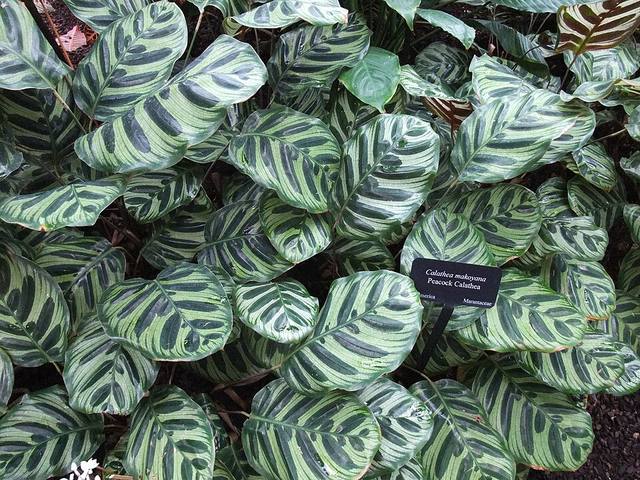
A plant with oval leaves that look hand-painted, with dark green feather marks on pale green and purple undersides. The leaves rise and fall each day.
The ASPCA lists this plant as non-toxic to cats and dogs
Care
Light
Bright, indirect light
Bright, indirect light, or bright shade. Direct sun fades and scorches the leaf patterns. Leaves that stay folded up in the day or pale mean low light.
Water
About every 6 days in the growing season, every 10 in the cool season
Keep the soil lightly moist but never wet. Use filtered or rainwater if you can, because tap-water minerals brown the leaf edges. Let the pot drain fully.
Water when the top 2 cm (1 in) of soil is dry
Humidity
High humidity
It needs 60 percent humidity or more. Dry air curls the leaves and crisps the edges. Use a humidifier or group it with other plants.
Temperature
18 to 27 °C (64 to 81 °F)
Keep it at 18 to 27 °C (64 to 81 °F). Damage begins below about 13 °C (55 °F), and cold drafts curl the leaves.
Soil
A light, peaty, well-drained mix with perlite. Use a pot with drainage holes. It prefers slightly acidic soil.
Feeding
Every 4 weeks in the growing season
Feed every 4 weeks in spring and summer with a quarter- to half-strength houseplant fertiliser. Too much feed scorches the leaf tips.
Repotting
Every 2 years
Repot every 2 years in spring into a pot one size up, or divide the clump at the same time.
Pruning
Cut off dead or yellow leaves at the base. Do not trim into the green of a leaf.
Propagation
Divide the clump in spring, separating pieces with roots and several leaves, and pot them in moist mix. Keep them warm and humid.
Size
40 to 70 cm (16 to 28 in)
Medium growth
Outdoors
Only grown outdoors in frost-free, humid, shady tropical gardens. Elsewhere it is a houseplant.
Common problems
Curling leaves, crisp brown edges
Dry air or tap-water minerals
Raise humidity and use filtered or rainwater.
Yellow leaves
Overwatering or cold
Let the top dry a little, check drainage and move away from drafts.
Faded, patchy leaf pattern
Too much direct light
Move to bright shade.
Leaves stay folded all day
Dry soil or low light
Water and move to brighter light.
Webbing under the leaves
Spider mites
Rinse the leaves, raise humidity and wipe weekly.
Did you know?
The leaves fold upward at night and open again in the morning. People call these plants prayer plants for that movement.
General care information for a typical plant. Conditions in your home or garden may need a different rhythm.
Not sure what your plant is?
Identify a plant from a photoSee this guide in the appKagn Plants also keeps your own plants with watering reminders, and its plant doctor reads what is wrong with one.
Updated 22 November 2026.