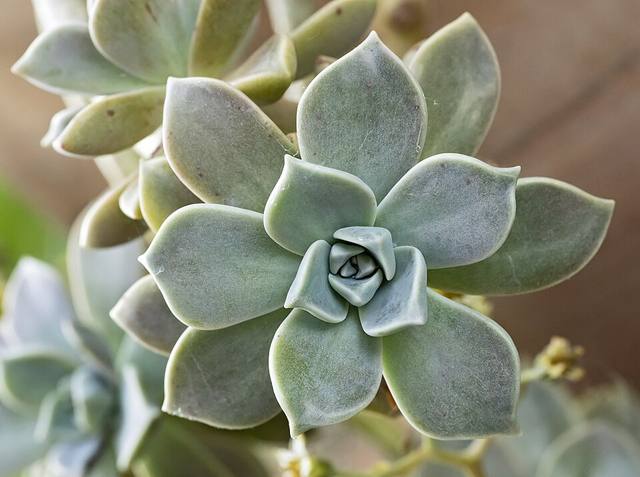
Photo: Didier Descouens · CC BY-SA 4.0 · Wikimedia Commons

Ghost plant
Graptopetalum paraguayense
Also called Mother of pearl plant, Mother-of-pearl
Succulent or cactus · Family Crassulaceae · Native to Mexico (Tamaulipas)
A rosette succulent with fat grey-lilac leaves that look dusted with powder. It trails as it grows and spreads easily, which makes it a favourite for pots and hanging baskets.
The ASPCA lists this plant as non-toxic to cats and dogs
Care
Light
Full sun
Bright light with some direct sun gives the pinkest colour. In low light it turns pale green and stretches. Protect from fierce midday sun behind glass, which can scorch the leaves.
Water
About every 14 days in the growing season, every 28 in the cool season
Soak, then let the mix dry fully. Wrinkled leaves mean thirst; soft, translucent leaves mean too much water. Do not leave the pot standing in a saucer of water.
Water when the soil is completely dry
Humidity
Low humidity
Normal dry room air suits it. High humidity combined with poor airflow can lead to rot.
Temperature
10 to 30 °C (50 to 86 °F)
Best at 10 to 30 °C (50 to 86 °F). Damaged by frost; keep above about 2 °C (36 °F).
Soil
Gritty cactus mix with extra perlite or pumice. Drainage holes are essential. Slightly acidic to neutral.
Feeding
Every 8 weeks in the growing season
Feed with half-strength cactus fertiliser every 8 weeks in spring and summer. Not needed in winter.
Repotting
Every 2 years
Repot every 2 years in spring, or when the rosettes overflow the pot. Handle gently: leaves drop off at a touch.
Pruning
Cut leggy stems back to a rosette in spring. Each cut stem will branch.
Propagation
Lay a fallen leaf on dry gritty mix and mist lightly every week. It roots and forms a new rosette in weeks. Stem tip cuttings also work. Let cuts dry for a day first.
Size
10 to 30 cm (4 to 12 in)
Medium growth
Outdoors
USDA zones 9 to 11
Grows outdoors in frost-free gardens in full sun to part shade on dry, well-drained soil. Elsewhere bring it in before frost.
Common problems
Leaves drop at a touch
Leaves are loose by nature
Handle as little as possible. Dropped leaves can be used to grow new plants.
Stretched stem, pale leaves
Not enough light
Move to a sunny window or outdoors in summer.
Soft, see-through leaves
Overwatering
Stop watering until the soil is dry. Cut away rotted parts and repot in dry mix.
Wrinkled, thin leaves
Thirst
Water thoroughly; leaves plump up in a day or two.
Cottony white spots
Mealybugs
Dab with alcohol on a cotton bud and check again after a week.
Did you know?
The powdery coating on the leaves is a waxy bloom. Rubbing it with your fingers leaves permanent marks.
General care information for a typical plant. Conditions in your home or garden may need a different rhythm.
Not sure what your plant is?
Identify a plant from a photoSee this guide in the appKagn Plants also keeps your own plants with watering reminders, and its plant doctor reads what is wrong with one.
Updated 22 November 2026.