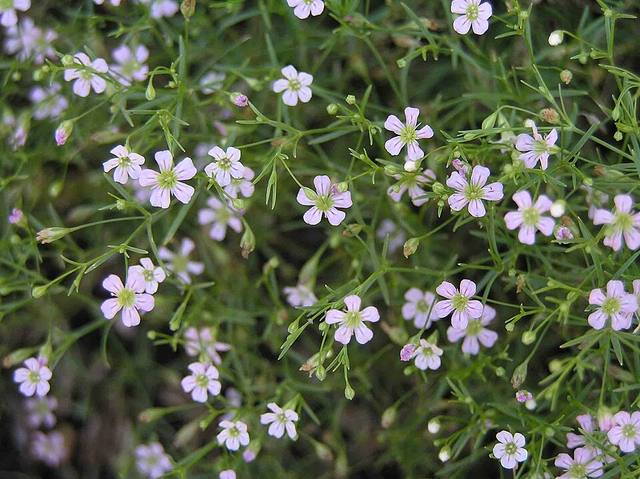
Photo: 阿橋 HQ · CC BY-SA 2.0 · Wikimedia Commons

Baby's breath
Gypsophila paniculata
Also called Gypsophila, Common gypsophila
Garden flower · Family Caryophyllaceae · Native to Central and eastern Europe, central Asia
An airy perennial covered in clouds of tiny white flowers in summer. It is grown in borders and cut for bouquets.
Not on the ASPCA's list: keep it out of reach of pets.
Care
Light
Full sun
Needs full sun. In shade it grows thin and floppy with few flowers.
Water
About every 10 days in the growing season, every 30 in the cool season
Water new plants every week, then only in long dry spells. It has a deep taproot and prefers dry roots. Wet soil, especially in winter, kills it.
Water when the top 5 cm (2 in) of soil is dry
Humidity
Low humidity
It likes dry air and good air flow. Humid, crowded conditions bring grey mould.
Temperature
10 to 27 °C (50 to 81 °F)
Hardy to about -35 °C (-31 °F). Grows best at 10 to 27 °C (50 to 81 °F). It dies back in winter.
Soil
Light, well-drained, neutral to alkaline soil, even stony or chalky. Add lime or grit to acid clay. It dislikes being dug up.
Feeding
It does not need feeding. Rich soil gives leaves and floppy stems.
Repotting
Do not disturb it: the deep taproot resents moving. Plant it where it will stay for years.
Pruning
Cut spent stems back by half after the first flush to get a second flowering. Cut to the ground in late autumn.
Propagation
Hard from cuttings. Sow seed in spring where it will flower, or buy grafted double types, which are not grown from seed.
Size
60 to 120 cm (24 to 47 in)
Medium growth
Outdoors
USDA zones 3 to 9
Grows in full sun in borders and cutting gardens. Space plants 60 to 90 cm (24 to 36 in) apart. It fills gaps left by early perennials.
Common problems
Plant flops after rain
Tall light stems, too much feed or shade
Stake early with a ring, or grow through a frame. Stop feeding.
Crown rots
Wet, heavy or acid soil
Plant on a slope or mound in gritty soil with lime added.
Grey fuzzy mould on flowers
Botrytis in damp weather
Cut off affected parts, give more space and water at the base only.
Plant dies after moving
Broken taproot
Move only very young plants. Dig deep to keep the root whole.
Few flowers
Too little sun or too much nitrogen
Give full sun and stop feeding.
Did you know?
The name means 'gypsum-loving' in Greek, because it grows well on lime-rich soils. Dry plants break off and roll in the wind as tumbleweeds.
General care information for a typical plant. Conditions in your home or garden may need a different rhythm.
Not sure what your plant is?
Identify a plant from a photoSee this guide in the appKagn Plants also keeps your own plants with watering reminders, and its plant doctor reads what is wrong with one.
Updated 22 November 2026.