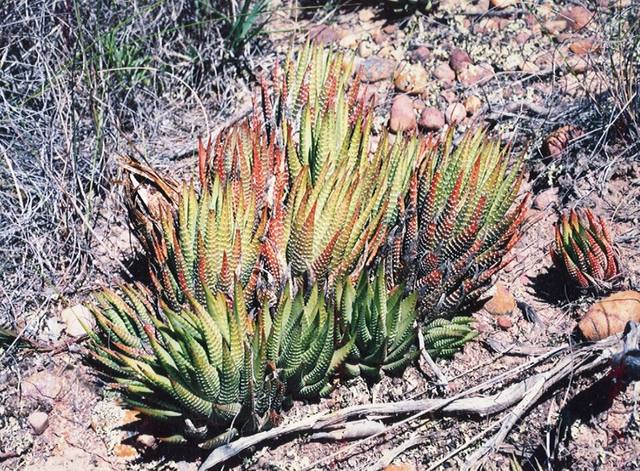
Photo: Abu Shawka · CC BY-SA 4.0 · Wikimedia Commons

Zebra plant
Haworthiopsis fasciata
Also called Zebra haworthia, Zebra cactus, Pearl plant
Succulent or cactus · Family Asphodelaceae · Native to Eastern Cape, South Africa
A small rosette of stiff, pointed green leaves banded with white raised bumps. It is a tough little succulent for a bright windowsill.
The ASPCA lists this plant as non-toxic to cats and dogs
Care
Light
Bright, indirect light
Bright indirect light, or morning sun. Direct hot afternoon sun turns it red-brown, while too little light makes the rosette stretch.
Water
About every 14 days in the growing season, every 35 in the cool season
Water thoroughly, then let the soil dry completely. The fleshy roots and leaves hold water, so rot from too much is the real risk. Water less in winter.
Water when the soil has been dry for several days
Humidity
Low humidity
Dry indoor air suits it. No misting.
Temperature
15 to 28 °C (59 to 82 °F)
Best at 15 to 28 °C (59 to 82 °F). It is damaged below about 5 °C (41 °F); a cool, dry winter is fine.
Soil
A gritty cactus or succulent mix with extra pumice or sand. Use a shallow pot with drainage holes.
Feeding
Every 8 weeks in the growing season
Feed with a weak cactus fertiliser every 8 weeks in spring and summer. Skip it in winter.
Repotting
Every 2 years
Repot every 2 to 3 years in spring or when offsets crowd the pot. A shallow pot is better than a deep one.
Pruning
Cut off dead lower leaves and the dried flower stalk after it has finished.
Propagation
Twist or cut off the small offsets (pups) with some root, let the cut dry a day, then pot them in gritty soil.
Size
8 to 20 cm (3 to 8 in)
Slow growing
Outdoors
USDA zones 9 to 11
Frost-free climates in part shade, in a rock garden or pot. Elsewhere keep it indoors, and bring pots in before frost.
Common problems
Brown, red or scorched leaves
Too much direct sun
Move to bright indirect light; the colour fades back with new growth.
Soft, mushy base
Overwatering
Remove from the pot, cut off rotted roots and repot into dry gritty mix.
Leaves thin and stretched
Too little light
Move to a brighter place so the rosette grows compact.
Wrinkled, shrinking leaves
Thirst or dead roots
Water well; if it stays limp, check for rotted roots.
Cottony white spots at the base
Mealybugs
Dab with rubbing alcohol on a cotton bud and repeat weekly.
Did you know?
The white stripes are rows of raised bumps on the underside of each leaf. The rosette stays small, usually under 20 cm (8 in) tall, and offsets itself freely.
General care information for a typical plant. Conditions in your home or garden may need a different rhythm.
Not sure what your plant is?
Identify a plant from a photoSee this guide in the appKagn Plants also keeps your own plants with watering reminders, and its plant doctor reads what is wrong with one.
Updated 22 November 2026.