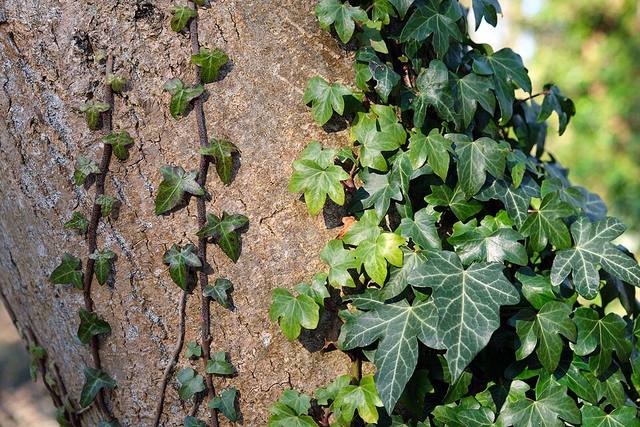
Photo: kallerna · CC BY-SA 4.0 · Wikimedia Commons

English ivy
Hedera helix
Also called Common ivy, European ivy
Houseplant · Family Araliaceae · Native to Europe and western Asia
A climbing evergreen vine with lobed, glossy leaves. It covers walls and trailing baskets and is a classic hardy plant.
Toxic to cats and dogs
Toxic principle: Triterpenoid saponins (hederagenin)
Signs: Vomiting, abdominal pain, drooling, diarrhea. ASPCA: foliage is more toxic than berries
Care
Light
Bright, indirect light
Bright indirect light, or part shade outdoors. Variegated types need more light. Low light makes growth leggy; hot sun scorches.
Water
About every 7 days in the growing season, every 14 in the cool season
Keep slightly moist and never soggy, and do not let it dry out completely. Dry air and dry soil together invite spider mites.
Water when the top 2.5 cm (1 in) of soil is dry
Humidity
Medium humidity
Likes a little humidity; dry heated air brings spider mites and crisp leaf edges. Misting or a cool room helps.
Temperature
10 to 22 °C (50 to 72 °F)
Best cool, 10 to 22 °C (50 to 72 °F). Outdoors it survives to -15 °C (5 °F). Hot, dry rooms stress it.
Soil
Well-draining potting mix with some perlite or grit. Outdoors it grows in most soils, preferably moist and slightly alkaline to neutral.
Feeding
Every 4 weeks in the growing season
Feed every 4 weeks in spring and summer with a balanced liquid fertiliser. None in winter.
Repotting
Every 2 years
Repot every 2 years in spring, one size up.
Pruning
Trim trailing stems above a leaf at any time to keep it bushy, and cut back hard in spring if it is leggy.
Propagation
Cut a stem below a node, remove the lowest leaf and root it in water or moist compost. Roots form in 2 to 4 weeks.
Size
60 to 300 cm (24 to 118 in)
Fast growing
Outdoors
USDA zones 4 to 9
Climbs walls and trees or trails as a ground cover in shade or sun. It can be invasive in parts of North America and Australia.
Common problems
Webs and speckled leaves
Spider mites
Wash leaves, raise humidity, spray with insecticidal soap.
Brown, crisp leaf edges
Dry air or dry soil
Water more regularly and keep it cooler.
Yellow leaves
Overwatering
Let the soil dry slightly and check drainage.
Leggy stems with small leaves
Too little light
Move to a brighter spot and prune.
Variegation fades to green
Low light
Give brighter indirect light.
Did you know?
Ivy has two forms: climbing juvenile stems with lobed leaves, and adult flowering shoots with plain leaves that make berries and are good for birds and insects.
General care information for a typical plant. Conditions in your home or garden may need a different rhythm.
Not sure what your plant is?
Identify a plant from a photoSee this guide in the appKagn Plants also keeps your own plants with watering reminders, and its plant doctor reads what is wrong with one.
Updated 22 November 2026.